
how to stay safe when cycling at night comes down to two things you can control on almost every ride: being seen early, and avoiding surprises you can’t brake for in time.
If you ride after work, train through winter, or commute year-round, night cycling isn’t optional, it’s just life. The problem is that drivers misjudge speed and distance in the dark, and riders often overestimate how visible they look under streetlights.
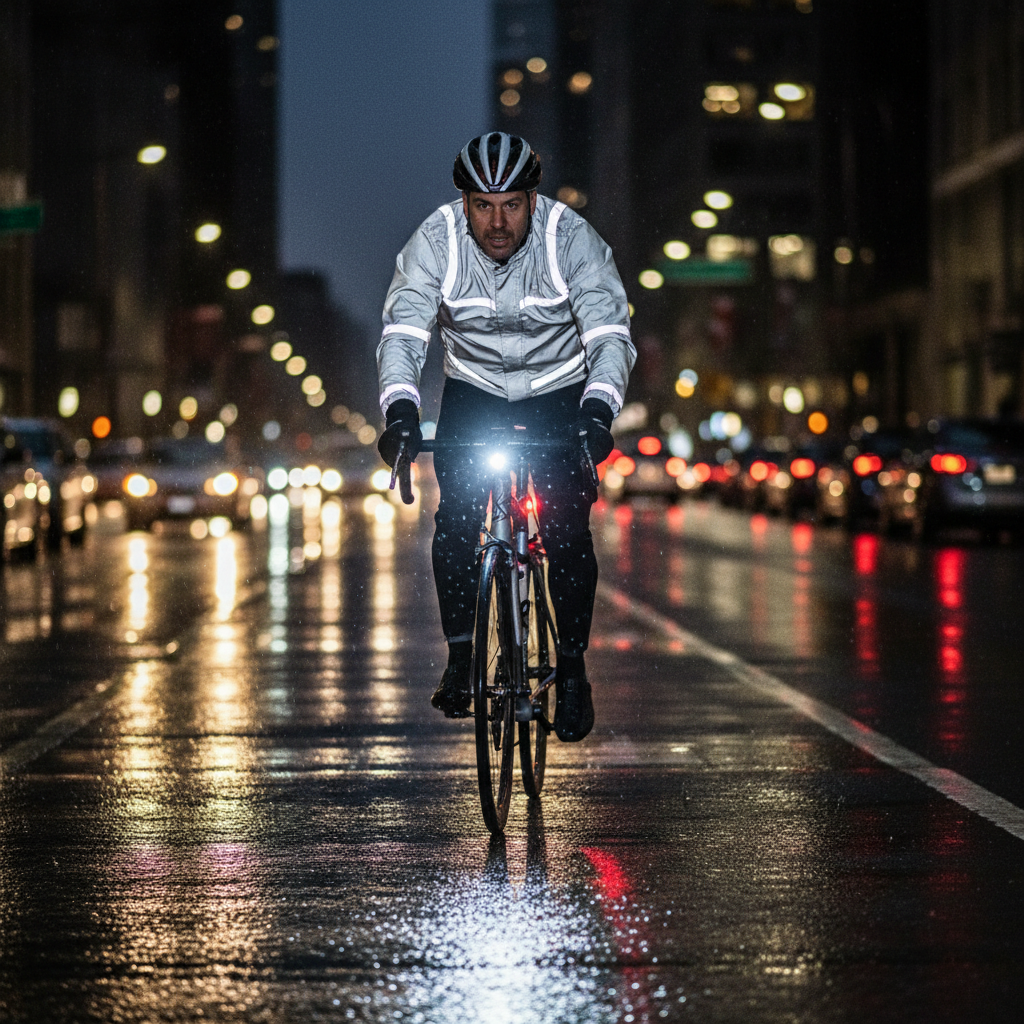
This guide stays practical. You’ll get a quick self-check, a gear-and-setup table, route choices that actually reduce risk, plus a few habits that matter more than buying another accessory.
Why night riding feels riskier (and where the risk really comes from)
Darkness doesn’t just reduce visibility, it changes how people behave. Drivers scan differently, cyclists miss surface detail, and everyone’s reaction time effectively shrinks because you spot hazards later.
- “I can see fine” isn’t the same as “drivers can see me.” Streetlights help you see the road, but they can also create glare and deep shadows that hide you.
- Speed judgment gets worse. A driver pulling out of a side street may misread how fast you’re closing.
- Surface hazards show up late. Potholes, debris, and slick paint lines can blend into the road at night.
- Distraction stacks. Night commutes often overlap with tiredness, phone use in cars, and busy intersections.
According to NHTSA, a disproportionate share of traffic fatalities happen after dark, which is why “be seen” and “buy time” are the themes you’ll keep seeing in the advice below.
A fast self-check: are you set up for tonight’s ride?
Before you roll, take 60 seconds and be honest. If you answer “no” to multiple items, adjust now rather than trying to ride carefully and hope it balances out.
- Front light: Can you light up the road far enough ahead to stop safely at your current speed?
- Rear light: Is it bright, charged, and aimed level so it’s visible from behind, not pointed at the ground?
- Visibility: Do you have reflective elements on moving parts (ankles/heels) or only on a static jacket?
- Route: Does your route avoid the worst high-speed merges and unlit shoulders?
- Mindset: Are you ready to ride a little slower and assume you’re not seen?
If the sticking point is “I have lights, but I still feel invisible,” that’s common. It usually means the beam pattern, placement, and contrast are off, not that you need a brighter gadget every time.
Lights and reflectivity: what matters most (and what’s just marketing)
When people ask how to stay safe when cycling at night, they often jump straight to “How many lumens?” Lumens matter, but the bigger deal is whether your setup creates a clear, readable signal for drivers and a useful view for you.
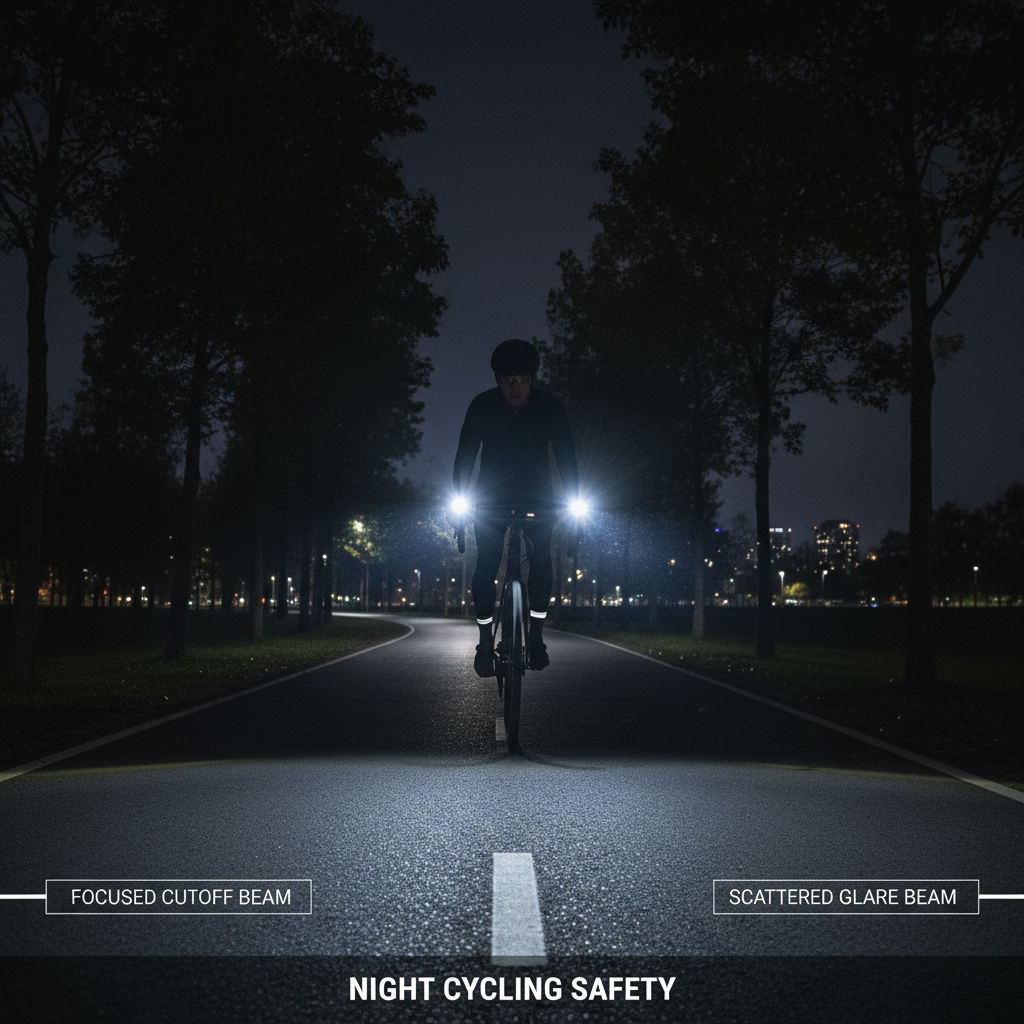
Front light: see the road without blinding everyone
Look for a light that gives you a stable beam and enough run time for your whole ride plus margin. A light that dies halfway home is worse than a modest light that stays on.
- Use steady mode for most road riding. Flash can help attention, but steady light helps drivers judge distance and speed. Many riders run steady front, flash rear, but local rules and conditions vary.
- Aim matters. Tilt the light slightly down so the hot spot lands ahead of you, not in oncoming eyes.
- Match light to speed. If you’re riding fast on unlit roads, you need enough throw to brake for hazards you’ll only see late.
Rear light: visibility from far back and from angles
Rear visibility isn’t just “bright,” it’s “noticeable early and readable.” A taillight that’s too narrow can disappear when a car approaches at an angle.
- Choose wide-angle visibility. Especially helpful at intersections and on curving roads.
- Mount it steady. Saddle bag straps can bounce, which makes the light look inconsistent.
- Keep it clean. Road spray and dust quickly cut brightness.
Reflective gear: prioritize movement
Reflective vests help, but reflective motion helps more. Ankles and pedals create a human-recognizable pattern that drivers pick up faster than a glowing dot.
- Reflective ankle bands or shoe/heel reflectors
- Reflective sidewalls or reflective wheel decals
- Reflective strips on gloves for hand signals
Gear checklist with practical picks (comfort counts too)
Safety equipment works best when you’ll actually use it every ride. If a jacket is too hot or gloves feel bulky, people skip them, then wonder why night rides feel sketchy.
| Item | What to look for | Common mistake |
|---|---|---|
| Front headlight | Reliable battery, clear beam pattern, easy mount | Pointing it too high, creating glare |
| Rear taillight | Wide-angle visibility, secure mount, long run time | Letting it get blocked by a jacket or bag |
| Reflective elements | Reflective on ankles/wheels plus torso | Only wearing dark clothing with a small reflector |
| Helmet | Proper fit, undamaged foam, secure straps | Loose fit that shifts when you look back |
| Gloves/eye protection | Grip, warmth, clear lenses to cut wind/bugs | Using tinted lenses that reduce detail at night |
| Bell or horn | Quick access, loud enough for shared paths | Relying on shouting in windy conditions |
Key point: Don’t ignore comfort upgrades. Cold hands and watery eyes can reduce control and scanning, which quietly increases risk.
Route and timing: the easiest “safety upgrade” costs nothing
Many night incidents are less about skill and more about being in the wrong place at the wrong time: high-speed arterials, complex merges, or dark shoulders with no escape space.
- Favor lower-speed streets. A slightly longer route with calmer traffic often feels dramatically safer.
- Avoid pinch points. Bridges, freeway on-ramps, and narrow lanes with no shoulder tend to be trouble.
- Choose consistent lighting. Patchy lighting can be worse than steady darkness because your eyes keep adapting.
- Time your ride if you can. Riding 20 minutes earlier can mean less bar traffic, less rush, or fewer delivery drivers, depending on your city.
If you commute, consider a “night route” and a “day route.” They’re not always the same, and that’s normal.
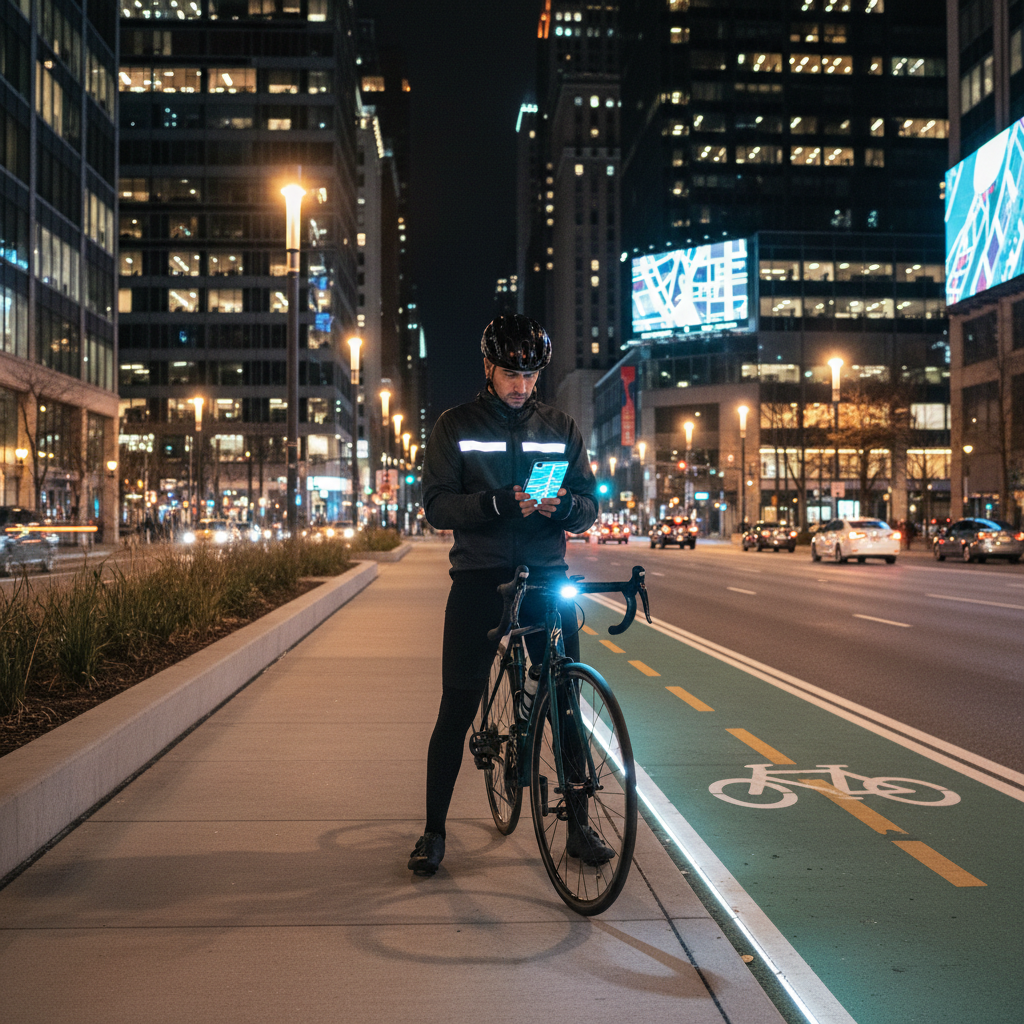
Riding technique at night: small habits that prevent big problems
This is the part people skip because it’s not fun to shop for, but it’s where your safety margin actually comes from. The goal is to give yourself more time and make your movements more predictable.
Slow down where your stopping distance matters
- On unlit paths, ride at a speed where you can stop within the distance your light reveals.
- Approach intersections as if a car might roll through the stop, even when you have the right of way.
Own your lane when you need to
Hugging the edge can invite unsafe passes and puts you on top of debris. In many situations, riding a bit more into the lane makes you more visible and predictable, but use judgment and local laws vary.
Communicate earlier and bigger
- Signal earlier because drivers need more time to process movement in the dark.
- Make eye contact when possible and look for wheel movement, not just headlights.
- Be consistent with your line, sudden swerves are harder for drivers to track at night.
Scan differently
At night, scan for “shapes and shine”: pothole edges, glass sparkle, wet leaves, and reflective paint. If you wear clear lenses, they can reduce wind and keep your eyes from tearing up, which helps you keep scanning.
Common mistakes that quietly make night rides less safe
Most riders who feel unsafe at night aren’t reckless, they’re just missing one or two basics that compound.
- Running a bright front light aimed too high. You gain brightness but create glare, and drivers may react poorly.
- Only lighting the bike, not the rider. A rear light without reflective motion can read as “small object” until it’s close.
- Assuming bike lanes are always safer. Some are door-zone traps at night, and parked cars hide you from cross traffic.
- Forgetting side visibility. Most close calls happen at intersections, which is an angle problem, not a straight-line problem.
- Skipping the pre-ride check. Loose mounts and low batteries show up at the worst time.
According to CDC, helmets reduce risk of head injury in bicycle crashes, but fit and correct use matter. If your helmet rocks back and exposes your forehead, it’s not doing what you think.
Step-by-step: a simple night-ride routine you can repeat
If you want something you can follow every time without overthinking, this routine works for many riders.
- Charge and check: confirm lights turn on, choose modes, confirm run time for the planned ride.
- Clean and aim: wipe lenses, aim front beam slightly down, ensure rear light points straight back.
- Dress for contrast: add reflective at ankles and at least one high-visibility item on the torso.
- Plan the route: pick calmer streets, avoid tight merges, identify one bailout option if traffic feels wrong.
- Ride with margin: slower at intersections and unlit segments, signal early, hold a predictable line.
Quick takeaway: If you only change one thing tonight, add reflective motion at the ankles and re-aim your front light. Those two adjustments often improve real-world visibility fast.
When to get help or upgrade your approach
If night riding still feels unsafe after you fix visibility and routes, it may be time to get another set of eyes on your setup. A local bike shop can help with light mounting, beam aim, and fit, and a skills class can help with scanning and traffic positioning.
If you have vision issues, frequent night glare, or headaches, consider discussing it with a qualified eye-care professional. Sometimes the barrier isn’t bravery or gear, it’s visual comfort and clarity.
Conclusion: safer night cycling is mostly about being predictable and obvious
how to stay safe when cycling at night isn’t about turning your bike into a billboard, it’s building a simple system: lights that help you see and be seen, reflective motion that reads as “cyclist,” a route that avoids high-speed conflict points, and a riding style that keeps extra time in your pocket.
For your next ride, do two things: aim and clean your lights, then choose the calmer route even if it adds a few minutes. If you do those consistently, night riding usually starts feeling less like a gamble and more like a routine.