
Gymnastics Fitness is one of the most practical ways to build flexibility that actually shows up in daily movement, not just in a one-off stretch test. If you feel “tight” despite stretching, or you can’t access positions like a deep squat, overhead reach, or split-style shapes without pinching, the issue is usually a mix of mobility, strength, and control.
Flexibility work in gymnastics looks different from the typical “hold a stretch and hope” approach. You’re training your nervous system to allow range, your joints to tolerate it, and your muscles to produce force there. That’s why it often feels more “athletic” than relaxing.
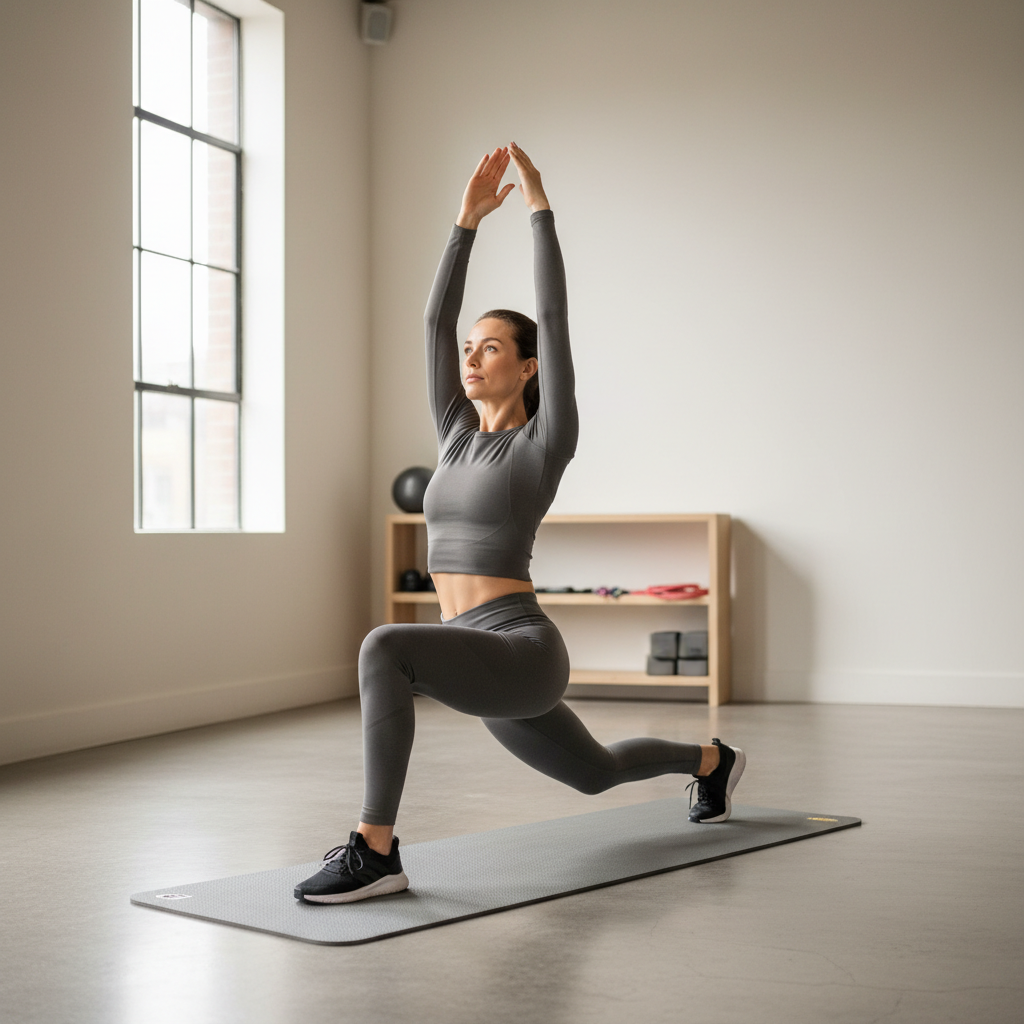
This guide breaks down what flexibility really means in a gymnastics context, how to tell what’s limiting you, and a plan you can run without turning every session into an hour-long stretching marathon.
What “Flexibility” Means in Gymnastics Fitness (and Why It Works)
In Gymnastics Fitness, flexibility usually means usable range of motion, not just passive range. Usable range is what you can control with good alignment, breathing, and stable joints.
Two terms matter here:
- Mobility: range of motion you can actively control (think: lifting your leg high without grabbing it).
- Flexibility: range of motion available at a joint, often tested passively (think: how far you can be pushed into a stretch).
Gymnastics-style training tends to blend both, because positions like bridges, splits, and overhead shapes require strength at end range, not just tolerance.
According to the American College of Sports Medicine (ACSM), flexibility training is typically recommended multiple days per week and can be improved through a combination of stretching methods. In practice, the “best” method often depends on whether your limiter is stiffness, weakness, or joint control.
Why You Feel Tight: Common Limiting Factors
Most people assume tightness equals “short muscles,” but real-life training shows it’s often more layered. These are common causes that show up when people adopt gymnastics-based flexibility work.
1) You’re missing strength at end range
If you can drop into a position when you hang on something or sink into it, but you can’t get there under your own control, strength is the missing piece. This is where active flexibility drills help.
2) Your nervous system is guarding
When a range feels unstable, your brain may limit motion as a protection strategy. Slow eccentrics, isometrics, and steady breathing tend to reduce this “braking” over time.
3) Joint positioning is off
Overhead flexibility is a classic example. Many people chase shoulder range when the real issue is rib flare, weak mid-back, or poor scapular control. It feels like “tight shoulders,” but it’s often a coordination problem.
4) You’re stretching the wrong area
Hamstrings get blamed a lot. Sometimes the hamstrings are fine, but calves, hips, or even neural tension are the real drivers. If you feel sharp pulling behind the knee rather than a broad muscle stretch, back off and consider asking a qualified coach or clinician.
Quick Self-Assessment: Figure Out Your “Flexibility Type”
This is a simple way to stop guessing. You’re not diagnosing yourself, you’re choosing smarter starting points.
- If you can get into the position passively but can’t hold it actively → prioritize active flexibility and isometrics.
- If you can’t get into the position at all → prioritize mobility prep and gentle loaded range progressions.
- If you get pinching in the front of the hip or shoulder → prioritize alignment changes, smaller ranges, and professional input if it persists.
- If flexibility improves in a warm workout but disappears the next day → you likely need more frequency and better end-range strength.
Key idea: your best program depends less on “how tight you are” and more on what kind of limitation shows up.
Gymnastics Fitness Flexibility Targets (What to Train First)
People often jump straight to splits and bridges. Those are great goals, but they go smoother when you prioritize the big three areas that unlock most skills.
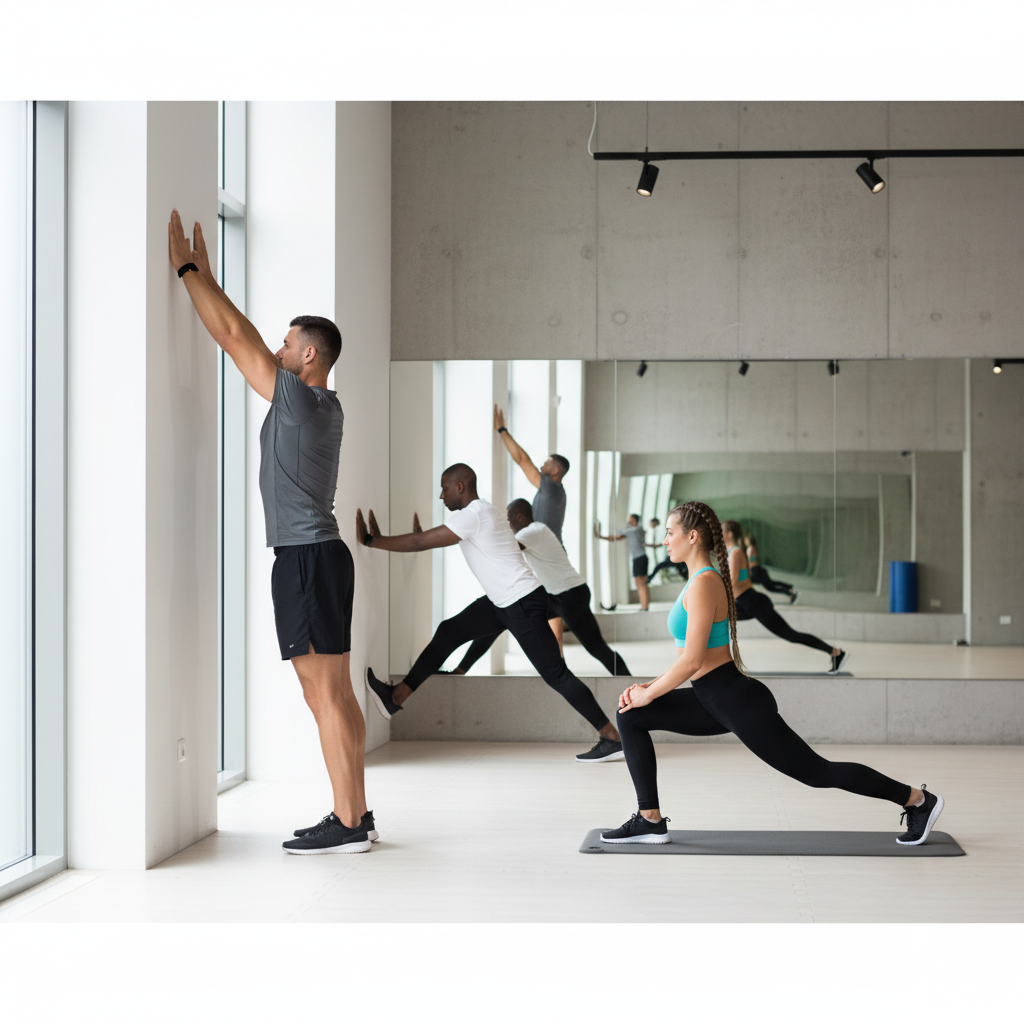
Shoulders (overhead line)
- Goal: arms overhead without rib flare, elbows bending, or neck strain
- Why it matters: handstands, rings support, overhead carries, even basic posture
Hips (extension + external rotation)
- Goal: hip flexors open without low-back dumping
- Why it matters: bridges, split progressions, running mechanics, squats
Ankles (dorsiflexion)
- Goal: knee travels forward with heel down and arch supported
- Why it matters: deep squat comfort, landings, jumps, lunges
A Practical Weekly Plan (20–35 Minutes, 3–5 Days/Week)
You don’t need a perfect routine, you need a repeatable one. In Gymnastics Fitness, consistency usually beats intensity for flexibility gains.
Session structure
- 3–6 minutes: heat + joint prep (light cardio, joint circles, gentle dynamic swings)
- 10–15 minutes: targeted mobility (shoulders/hips/ankles)
- 8–12 minutes: active flexibility + end-range strength
- 2–4 minutes: downshift breathing (helps recovery and tolerance)
Step-by-Step Drills for Flexibility That Carries Over
Below are go-to progressions that tend to work across a wide range of bodies. Keep pain out of the equation, “strong stretch” is fine, sharp pain is not.
Shoulder overhead mobility (wall + control)
- Wall slides: back to wall, ribs down, slide arms overhead slowly, 2–3 sets of 6–10 reps
- Lat stretch with posterior tilt: kneeling hands on bench, exhale and tuck pelvis slightly, 2 sets of 30–45 seconds
- End-range holds: light band or small weights, hold overhead position 10–20 seconds, 3 rounds
Hip flexor + front split pathway
- Couch stretch (scaled): squeeze glute of back leg, ribs stacked, 2 sets of 30–45 seconds each side
- Split isometrics: in a comfortable split stance, gently “drag” feet toward each other without moving, 3 rounds of 10–20 seconds
- Hamstring active lifts: heel on low box, straight back, lift toes and lightly lift leg, 2–3 sets of 6–8 reps
Ankle dorsiflexion (the deep squat helper)
- Knee-to-wall rocks: keep heel down, knee tracks over toes, 2–3 sets of 8–12 reps each side
- Calf eccentrics: slow lower off a step, 2–3 sets of 6–10 reps
Practical cue: if you can’t breathe calmly in the position, you’re probably too deep for productive work today.
Table: Match Your Goal to the Right Gymnastics Flexibility Method
This table helps you choose the tool instead of doing every drill you’ve ever saved on Instagram.
| Goal / Limiter | What it feels like | Best-fit methods |
|---|---|---|
| Active flexibility | You can get there with help, not alone | Isometrics, slow eccentrics, end-range holds |
| General stiffness | Everything feels restricted, improves with warm-up | Dynamic mobility, longer low-intensity holds, frequency |
| Pinching or joint irritation | Sharp pinch in hip/shoulder at a specific angle | Reduce range, adjust alignment, get coaching/clinical screen |
| Overhead limitations | Ribs flare, low back arches, neck tenses | Thoracic mobility, scap control, rib-stacked drills |
Common Mistakes (That Waste Time or Make You Feel Worse)
Flexibility frustration usually comes from a few predictable traps. If any sound familiar, that’s normal, it’s also fixable.
- Going too hard, too often: soreness is not the goal, and it often reduces range the next day.
- Chasing extreme shapes too early: bridges and deep splits can be fine, but they punish poor control.
- Ignoring warm-up: cold stretching can feel “effective” because it hurts, not because it helps.
- Copying a gymnast’s routine: many gymnasts built capacity for years, your starting point may differ.
- Only doing passive holds: without strength, range often stays temporary.
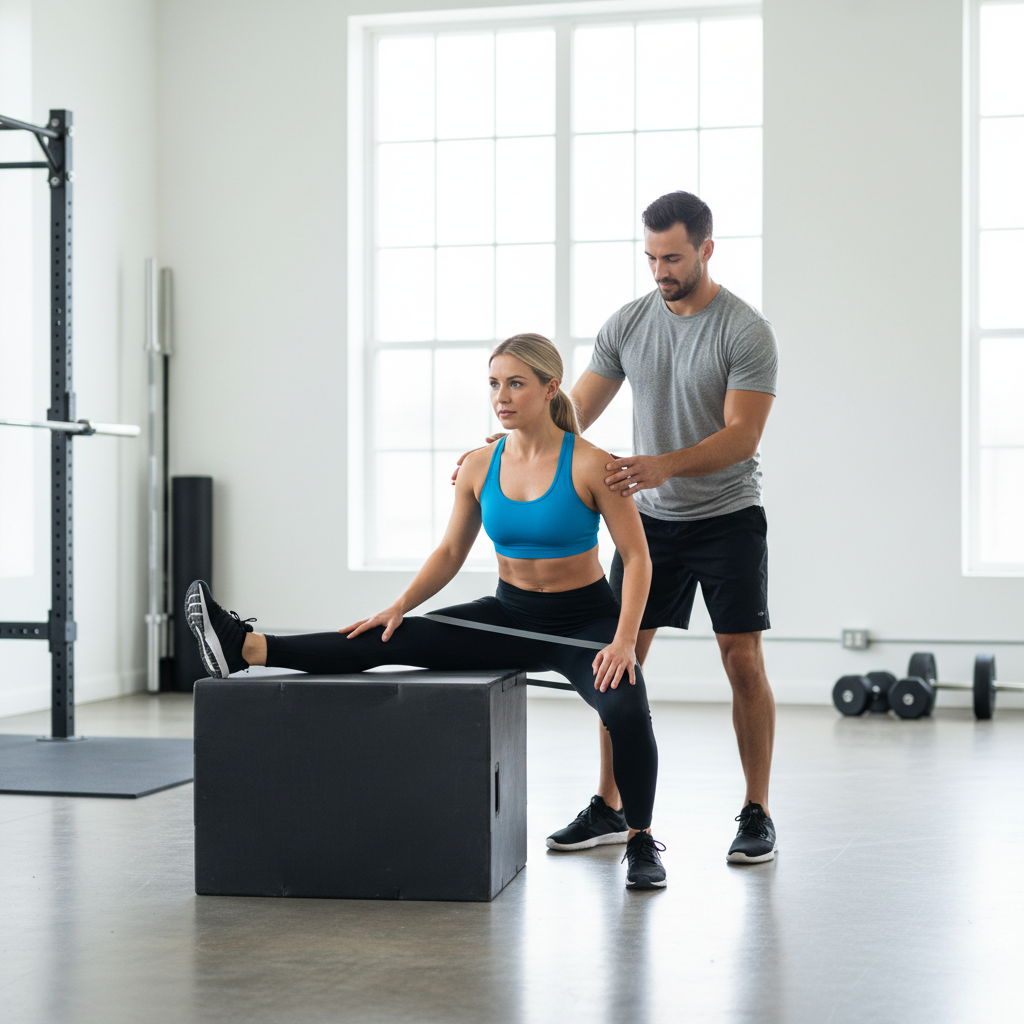
If you’re unsure whether you’re “supposed to feel” a stretch in a specific spot, that uncertainty alone is a sign to scale back and earn the position more gradually.
When to Get Help (Coach, PT, or Qualified Pro)
Flexibility work should feel challenging, not threatening. Consider getting professional guidance if any of these show up consistently:
- Pinching, catching, numbness, tingling, or radiating pain
- Pain that lasts beyond a day or changes how you move
- History of dislocations, significant joint instability, or recent surgery
- You’re progressing in one area but another joint keeps getting irritated
According to the Centers for Disease Control and Prevention (CDC), physical activity is beneficial for overall health, but people with injuries or medical conditions may need modified programming. If you have a relevant condition, it’s reasonable to ask a clinician or qualified coach to help you pick safe ranges and progressions.
Key Takeaways (Save This)
- Gymnastics Fitness flexibility improves faster when you train control, not just passive range.
- If you “lose” flexibility quickly, add frequency and end-range strength.
- Shoulders, hips, and ankles give the biggest return for most people.
- Sharp pain or pinching deserves a scale-down, and sometimes a pro check.
Conclusion: A Simple Next Step You Can Do This Week
If flexibility has felt like a grind, treat this as your reset: pick one target area, run the same short routine 3–5 days this week, and track one clear marker like overhead comfort, squat depth, or split distance. Keep the ranges honest, keep the breathing steady, and let the consistency do the heavy lifting.
If you want the most reliable payoff, add a small dose of end-range strength every session, that’s where gymnastics-inspired mobility usually separates itself from generic stretching.
FAQ
How often should I do Gymnastics Fitness flexibility training?
Many people do well with 3–5 short sessions per week. If you’re very sore or you lift heavy, you may need fewer days or lower intensity so recovery stays on track.
Is it better to stretch before or after a workout?
Light dynamic mobility often fits well before training, while longer holds and isometrics usually feel better after you’re warm. If a stretch reduces performance or makes a joint feel unstable, adjust timing and intensity.
Can beginners work on bridges and splits safely?
Often yes, but with progressions. Use blocks, partial ranges, and alignment cues, and avoid forcing depth. If you get pinching in the low back, shoulders, or front of the hip, scale back.
Why do my hamstrings feel tight even when I stretch them a lot?
It can be true hamstring stiffness, but it can also be hips, calves, or nervous system guarding. Adding active drills, like controlled lifts and isometrics, often changes the feeling more than longer passive holds.
What’s the difference between mobility and flexibility in gymnastics?
Flexibility is the available range, mobility is the range you can control. Gymnastics tends to demand both, because positions must be stable, not just reachable.
Do I need equipment for gymnastics-style flexibility?
Not much. A wall, a yoga mat, and optionally a resistance band or a low box cover most drills. The bigger factor is consistent practice and good positioning.
How do I know if I’m stretching too hard?
If you can’t breathe calmly, you’re shaking hard, or you feel sharp pain, you’re likely past productive intensity. A strong stretch sensation is okay, but it should feel controllable and not “electric.”
How long does it take to see flexibility improvements?
Some changes show up within weeks as your nervous system adapts, but lasting range typically takes longer and depends on your starting point, frequency, and whether you build strength at end range.