
Yoga for beginners works best when you treat it less like a workout you must “nail” and more like a skill you build, one cue at a time. If you feel stiff, unbalanced, or unsure what your body should be doing in a pose, you’re not behind, you’re normal.
Most people quit early for predictable reasons, holding their breath, pushing through wrist or low-back discomfort, copying advanced shapes from social media. The good news is you can sidestep almost all of that with a short set of foundational poses, plus a few rules that keep practice comfortable.
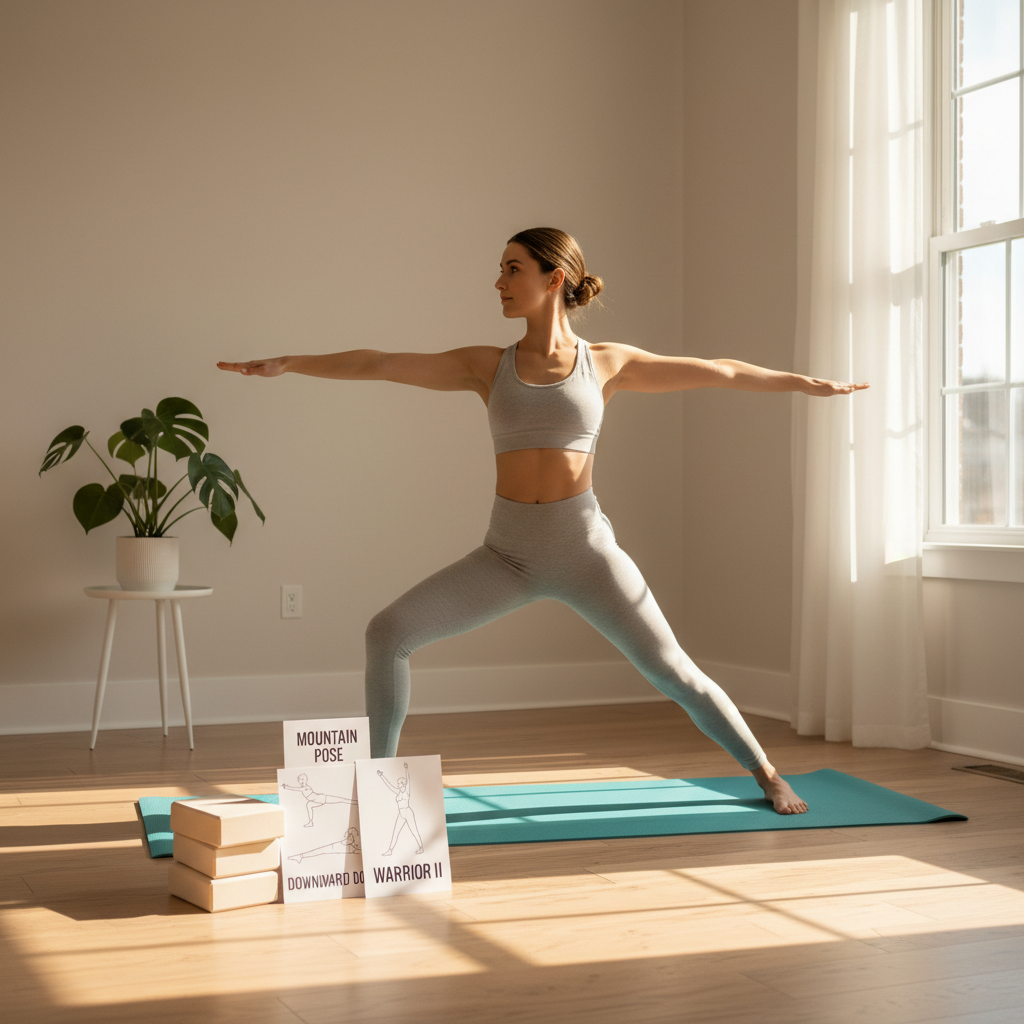
This guide focuses on basic poses you’ll see in many classes, how to set them up, what to feel, and what to modify. You’ll also get a quick self-check, a simple 15–20 minute sequence, and a few “stop signs” for safety.
Before you start: set up your body and space
You don’t need much, but a tiny bit of setup prevents the most common beginner frustrations. According to Yoga Alliance, yoga should be practiced with attention to safe alignment and personal limitations, especially for newcomers who are still learning body awareness.
- Gear: a yoga mat, plus 1–2 blocks or thick books, and a strap or belt.
- Surface: stable floor beats thick carpet, which can make balance wobblier.
- Warm-up idea: 3 slow breaths in a comfortable seated position, then gentle neck/shoulder rolls.
- Pain rule: sharp pain, pinching, numbness, or tingling means back out and modify.
If you’re pregnant, recently injured, or managing a medical condition, it’s wise to check with a qualified healthcare professional or a certified yoga teacher for personalized guidance.
Why beginner poses feel “hard” (and what that usually means)
If basic shapes already feel intense, it often has less to do with willpower and more to do with how modern bodies adapt to sitting, stress, and one-sided movement.
- Tight hips and hamstrings: forward folds and lunges feel blocked, your back tries to “borrow” movement.
- Low core endurance: planks and standing balance wobble fast, even if you’re generally fit.
- Wrist sensitivity: downward dog or tabletop loads joints you may not use much.
- Breath holding: the nervous system reads effort as threat, then everything feels harder.
For most people, the goal in yoga for beginners is not deeper shapes, it’s steadier breathing and cleaner setup. Depth tends to follow.
Quick self-check: which beginner profile sounds like you?
Use this to pick the right modifications, instead of forcing the “standard” version.
- “My wrists hate yoga”: hands get sore fast in plank/down dog.
- “My hamstrings are like cables”: forward folds pull hard, knees want to bend a lot.
- “My low back talks back”: lunges/backbends feel crunchy or compressed.
- “I’m wobbly”: balance poses feel frustrating even when you focus.
- “I’m out of breath”: effort spikes, you forget to breathe smoothly.
None of these mean you can’t do yoga. They just suggest where to be conservative and where props matter most.
8 basic yoga poses for newcomers (with beginner-friendly cues)
These are the “repeat offenders” you’ll see in many classes. Learn them once, and most flows make more sense.
1) Mountain Pose (Tadasana)
Setup: feet hip-width, stand tall, arms relaxed. Gently lengthen the back of your neck.
- Feel: even weight across both feet, ribs stacked over pelvis.
- Common fix: if you lock knees, soften them slightly.
2) Chair Pose (Utkatasana)
Setup: sit hips back like you’re aiming for an invisible chair, chest stays lifted.
- Feel: thighs working, heels grounded.
- Modify: hands to hips, smaller bend in knees.
3) Downward-Facing Dog (Adho Mukha Svanasana)
Setup: hands shoulder-width, feet hip-width, hips lift. Keep knees bent if needed.
- Feel: long spine, pressure spread through palms and fingers.
- Modify: bend knees a lot, or use blocks under hands to reduce wrist angle.
4) Plank (high plank or forearm plank)
Setup: shoulders stacked over wrists, legs active, belly gently firm.
- Feel: one long line from head to heels.
- Modify: knees down, or switch to forearms for wrists.
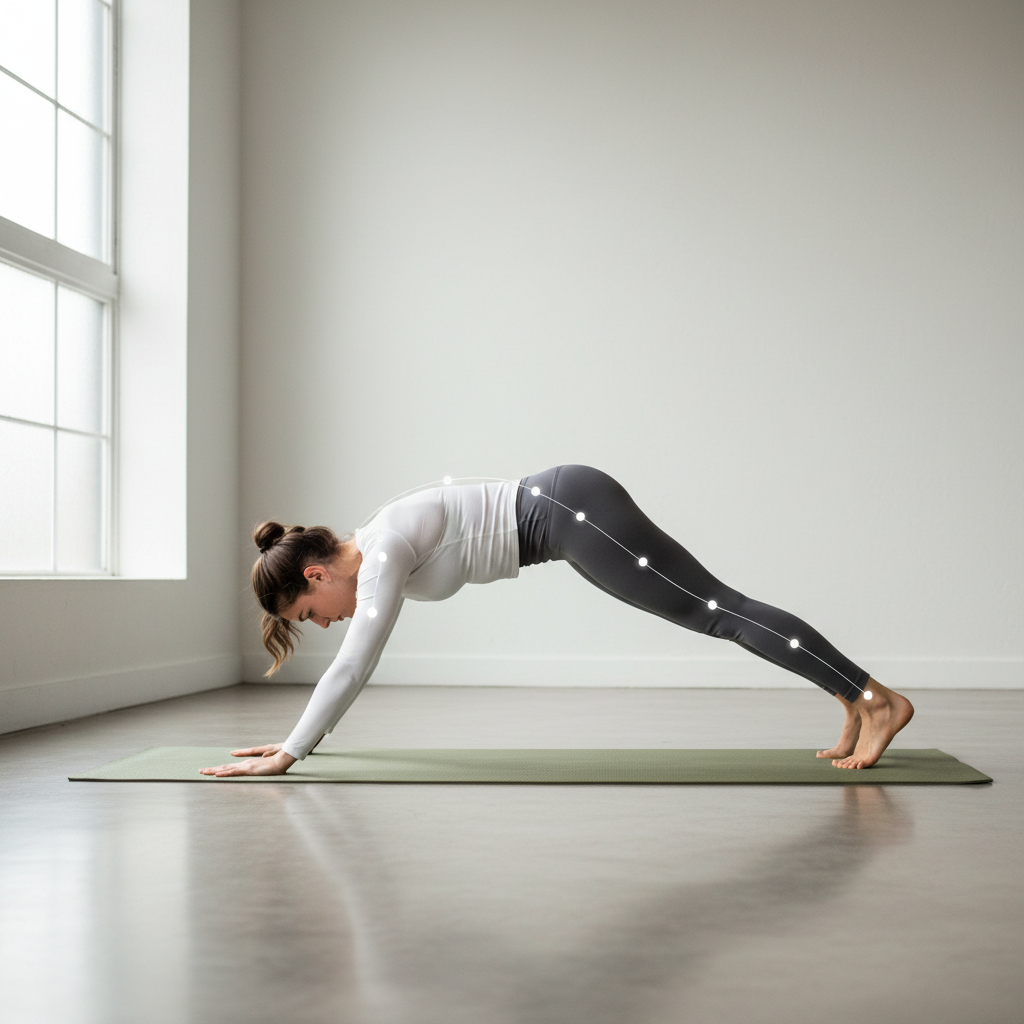
One small but powerful cue here, in both down dog and plank, push the floor away and keep your breath moving. If you’re shaking, that can be normal, if you’re straining your neck or holding your breath, scale down.
5) Cobra or Sphinx (gentle backbend)
Setup: lie on belly. For sphinx, elbows under shoulders; for cobra, hands under shoulders and lift chest slightly.
- Feel: length through front body, low back not pinched.
- Modify: stay in sphinx, keep lift small.
6) Warrior II (Virabhadrasana II)
Setup: wide stance, front knee bends over ankle, back leg straight, arms reach long.
- Feel: legs strong, torso upright.
- Common fix: if knee caves inward, widen stance or reduce bend.
7) Triangle Pose (Trikonasana)
Setup: from wide stance, hinge at hip toward front leg, reach hand to shin or a block.
- Feel: side body long, chest open.
- Modify: use a block, keep front knee softly bent.
8) Child’s Pose (Balasana)
Setup: knees down, hips toward heels, forehead toward mat, arms forward or alongside body.
- Feel: breath into back ribs, a sense of downshifting.
- Modify: place a pillow under hips or chest if knees/hips feel tight.
A simple 15–20 minute yoga for beginners routine (doable at home)
This is a practical starting flow, it’s short enough to repeat, and repetition is where beginners improve fastest.
- 1 minute: seated breathing, slow inhale and exhale
- 1 minute: gentle cat-cow (tabletop), move with breath
- 1 minute: child’s pose
- 2 minutes: downward dog, pedal feet, bend knees as needed
- 2 x 20–40 seconds: plank variation (knees down is fine)
- 1 minute: sphinx or small cobra
- 2 minutes: warrior II, both sides
- 2 minutes: triangle, both sides (use a block)
- 1 minute: chair pose, break into two shorter holds if needed
- 2–3 minutes: child’s pose or lie down and breathe
If you want one rule, keep the breath smooth enough that you could say a short sentence out loud. That tends to keep intensity in the right zone for yoga for beginners.
Modifications and props: what to change when something feels off
Modifying is not “making it easier,” it’s picking a version your body can learn from today. Here’s a quick reference.
| Problem area | What you might feel | Try this modification |
|---|---|---|
| Wrists | Ache in down dog/plank | Use fists or forearms, elevate hands on blocks, shorten holds |
| Hamstrings | Pulling in folds/triangle | Bend knees, use blocks, prioritize long spine |
| Low back | Pinching in cobra/lunges | Do sphinx, keep lift small, engage glutes lightly |
| Balance | Wobbling in standing poses | Widen stance, use a wall, slow the breath |
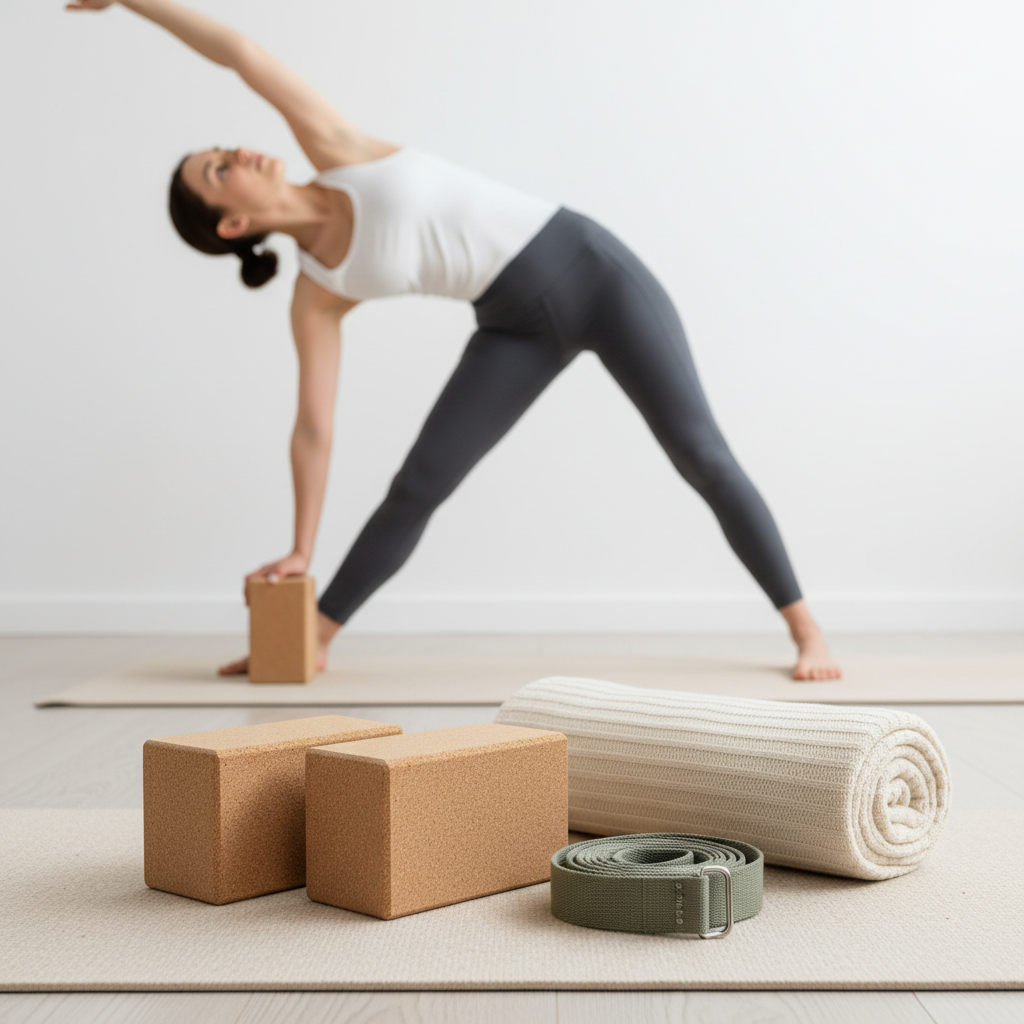
Props also help you stay longer in a pose without compensating, which is usually where flexibility and strength actually develop.
Common mistakes that slow progress (and how to avoid them)
- Chasing the shape: if your spine rounds hard in a fold, bend knees and keep length instead.
- Forcing range fast: tissues adapt over time, pushing can irritate joints or tendons.
- Skipping rest: child’s pose is part of practice, not a failure button.
- Comparing bodies: hip structure varies, two people can look different in “the same” pose.
- Practicing randomly: a short repeatable routine beats a new video every day.
Key takeaway: consistency plus comfort usually beats intensity for beginners, especially in the first month.
When to get help from a teacher or clinician
Online cues can take you far, but there are moments when a second set of eyes matters. According to the National Center for Complementary and Integrative Health (NCCIH), yoga is generally considered safe for many people when practiced appropriately, yet individuals with health conditions may need modifications and professional guidance.
- Pain that feels sharp, electrical, or keeps returning in the same spot
- History of major joint injury, spine issues, or recent surgery
- Dizziness, shortness of breath beyond normal exertion, or unusual symptoms
- Uncertainty about pregnancy-safe options or postpartum return to exercise
A certified yoga instructor can adjust alignment and offer prop setups quickly. If symptoms suggest injury risk, a licensed clinician may be the right next step.
Conclusion: a beginner plan that actually sticks
Yoga for beginners becomes enjoyable when you stop treating discomfort as a requirement and start treating it as feedback. Pick the 15–20 minute sequence, repeat it 2–4 times per week for a few weeks, and track two things, smoother breathing and fewer “uh-oh” moments in wrists, knees, or low back.
If you want a simple next step, choose three poses from the list, practice them for five minutes today, and note what feels tight versus what feels unstable. That little bit of awareness is usually the first real win.
FAQ
How often should I do yoga for beginners to see progress?
Many people notice small changes with 2–4 short sessions per week. A repeatable routine matters more than long, occasional practices.
Is it normal to shake in plank or chair pose?
Shaking can be a normal strength response, especially early on. If you’re holding your breath or feeling joint pain, shorten the hold or modify.
Should beginners do downward dog if their wrists hurt?
You can, but it depends on what “hurt” means. Mild fatigue may improve with better hand pressure and shorter holds, sharp pain suggests switching to forearms, using blocks, or skipping while you build tolerance.
Do I need to be flexible to start yoga?
No. Flexibility is often an outcome of practice, not an entry requirement. Props and bent knees are standard tools, not a workaround.
What should I feel in triangle pose?
Typically you feel a stretch along the side body and back leg, plus steadiness in the front hip. If you feel strain in the knee or low back, raise your hand on a block and soften the front knee.
Can beginners do yoga every day?
Often yes if intensity stays light and you rotate focus, but daily practice is not automatically better. Rest days help if you feel sore or run down.
What’s the best time of day to practice?
Whatever time you can repeat consistently. Mornings can feel stiff, evenings can feel tight from sitting, both are workable if you warm up gently.
How do I know if I’m pushing too hard?
If breathing gets jagged, you feel sharp pain, or you need to “brace” your face and neck, that’s usually too much. Back out to a version where you can breathe steadily.
If you’re building a home routine and want it to feel less like guesswork, a beginner-focused class plan, a few prop suggestions, or a teacher check-in can save time and reduce nagging discomfort, especially when you’re trying to make yoga a habit rather than a one-off attempt.