
Fat burning cardio works best when it matches your current fitness level, your schedule, and what you can repeat week after week without dreading it. The “best” option is rarely one magic machine, it’s the style of cardio that helps you train consistently while staying in the right effort zone.
If you feel stuck, you’re not alone. A lot of people do random cardio, then wonder why the scale stalls, their appetite spikes, or their knees start complaining. The truth is, fat loss depends on a sustainable calorie deficit, and cardio is a tool that can help create it, but the tool has to fit the job.

This guide breaks down what actually drives results, how to choose between steady-state and intervals, and how to build a simple weekly plan. You’ll also get a quick self-check, a comparison table, and a few “don’t waste your time” notes that can save weeks of frustration.
What really makes cardio “fat-burning” (and what people get wrong)
Fat loss happens when you consistently burn more energy than you take in, and cardio helps by increasing daily energy expenditure. But the way your cardio is structured changes how easy it is to recover, how hungry you feel, and whether you can keep it up.
Two common misconceptions show up all the time:
- Myth: You must stay in the “fat-burning zone.” Lower-intensity work uses a higher percentage of fat for fuel, but harder efforts can burn more total calories, and total weekly consistency usually wins.
- Myth: More sweat equals more fat loss. Sweat mostly reflects heat and hydration, not the quality of your plan.
According to the Centers for Disease Control and Prevention (CDC), adults generally benefit from at least 150 minutes of moderate-intensity aerobic activity per week, or 75 minutes of vigorous activity, plus muscle-strengthening work. That recommendation isn’t a “fat loss guarantee,” but it’s a solid baseline for health and a realistic starting point for many routines.
Types of fat burning cardio: what to choose and why
Most cardio options fall into a few buckets. Each can support fat loss, but they come with trade-offs in soreness, joint stress, time efficiency, and hunger response.
Low-Intensity Steady State (LISS)
Think brisk walking, easy cycling, incline treadmill walking, light jogging where you can talk in full sentences.
- Why it works: Easy to recover from, lower injury risk for many people, can be done more often.
- Where it fits best: Beginners, higher body weight, stressful schedules, people lifting 3–4x/week.
Moderate steady-state cardio
Comfortably hard, you can speak in short phrases but not hold a long conversation.
- Why it works: Good calorie burn without the “crash” some people feel after HIIT.
- Watch for: Going too hard too often, then recovery and motivation drop.
HIIT (High-Intensity Interval Training)
Short bursts near your hard effort level, with recovery intervals, like 20–40 seconds hard, 60–120 seconds easy.
- Why it works: Time-efficient, strong conditioning stimulus, can be mentally engaging.
- Where people mess up: Too many sessions per week, intervals too long, “all-out” every time, then shin splints or burnout show up.
Low-impact machines (bike, rower, elliptical)
These often let you train hard with less joint impact than running.
- Why it works: Great for consistency, easy to control intensity, usually more knee-friendly.
- Small downside: Some people “zone out” and under-train unless they track effort.
Quick comparison table: which cardio is best for your situation?
Use this table as a practical filter. If two options match you, pick the one you’ll actually repeat.
| Goal / Situation | Best-fit cardio style | Why it tends to work |
|---|---|---|
| Beginner, low fitness base | LISS walking, bike, elliptical | Lower soreness, easier habit building |
| Limited time (20–30 min) | Intervals on bike/rower | High stimulus per minute, structured |
| Knee/ankle sensitivity | Bike, rower, swimming, incline walk | Less impact, controllable intensity |
| Lifting 3–5 days/week | Mostly LISS + 1 HIIT max | Protects recovery so strength stays up |
| Plateau, steps already high | Add 1–2 moderate sessions | Increases weekly burn without “redlining” |
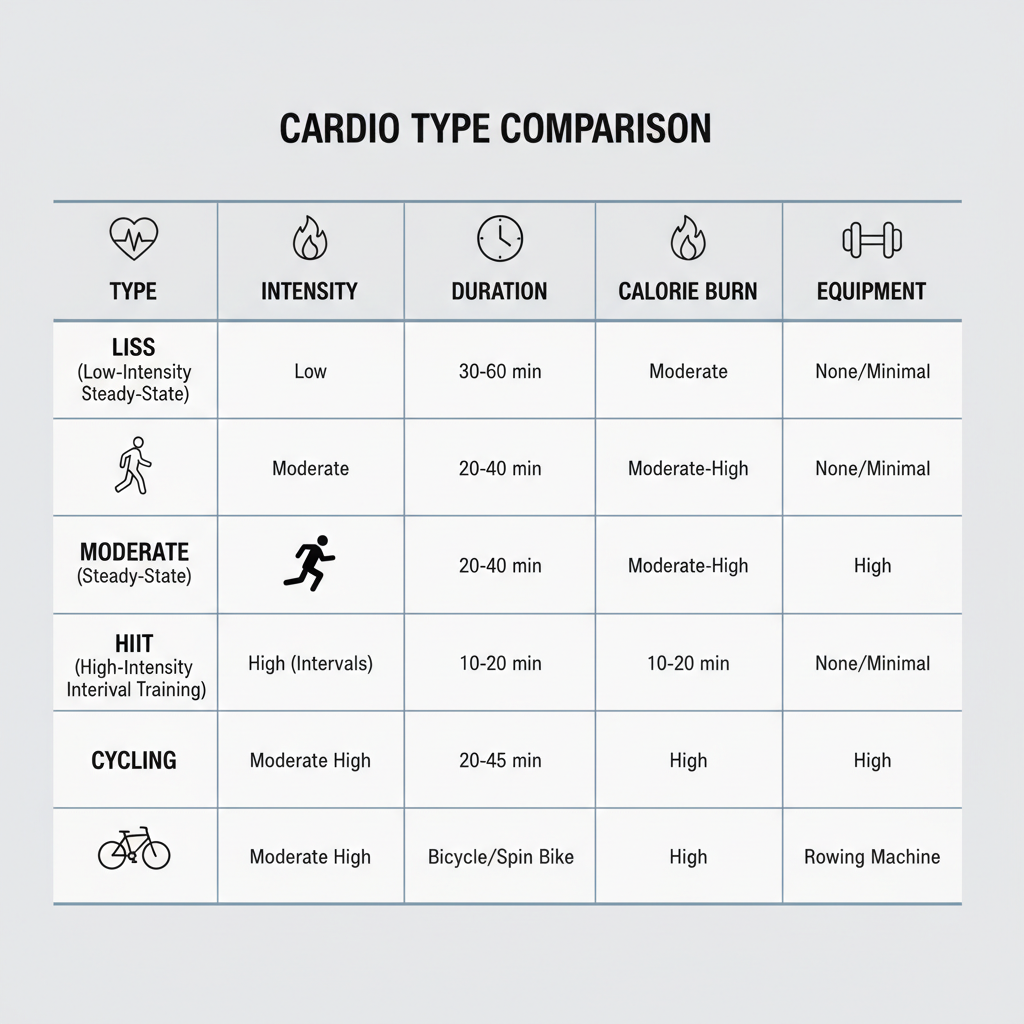
One more honest note: if your sleep is poor or your job stress runs high, moderate-to-low intensity cardio tends to be the most “fat loss friendly” because it doesn’t tax recovery as aggressively.
Self-check: are you doing the right intensity for fat loss?
Before changing your plan, it helps to label what you’re already doing. Many people think they’re doing LISS, but it’s actually moderate, and that can change recovery and appetite.
- LISS check: You can nasal-breathe most of the time, hold a full conversation, and you feel better after than before.
- Moderate check: You can talk, but you’d rather not, and you feel pleasantly tired afterward.
- HIIT check: The hard intervals feel “spicy,” your form wants to break down near the end, and you need real easy time to recover.
If your “easy” days feel heavy, your resting heart rate trends up, or your legs stay flat for days, your intensity mix might be off. In that case, swapping one hard day for walking can improve progress even if it feels backward.
Practical weekly plans (pick one and run it for 4 weeks)
These plans assume your goal is fat loss and general fitness, not performance racing. If you have medical concerns, joint pain, or a history of heart issues, it’s smart to consult a qualified clinician before pushing intensity.
Plan A: Beginner or restarting (4–6 weeks)
- 3–5 days/week: 25–45 minutes brisk walking or easy bike
- Optional: 1 day/week “long walk” 45–75 minutes
- Daily: step goal you can hit most days (consistency beats hero days)
Plan B: Busy schedule, wants efficiency
- 2 days/week: intervals on bike or rower (18–25 minutes total)
- 2–3 days/week: 25–40 minutes LISS (walk, incline walk, easy elliptical)
Simple interval template: warm up 6 minutes easy, then 6 rounds of 30 seconds hard and 90 seconds easy, cool down 4–6 minutes.
Plan C: Lifter who wants fat loss without losing strength
- 2–4 days/week: 20–40 minutes incline walking or easy cycling after lifting or on off days
- 1 day/week: short intervals only if recovery is solid
- Keep at least 1 full rest day if performance drops
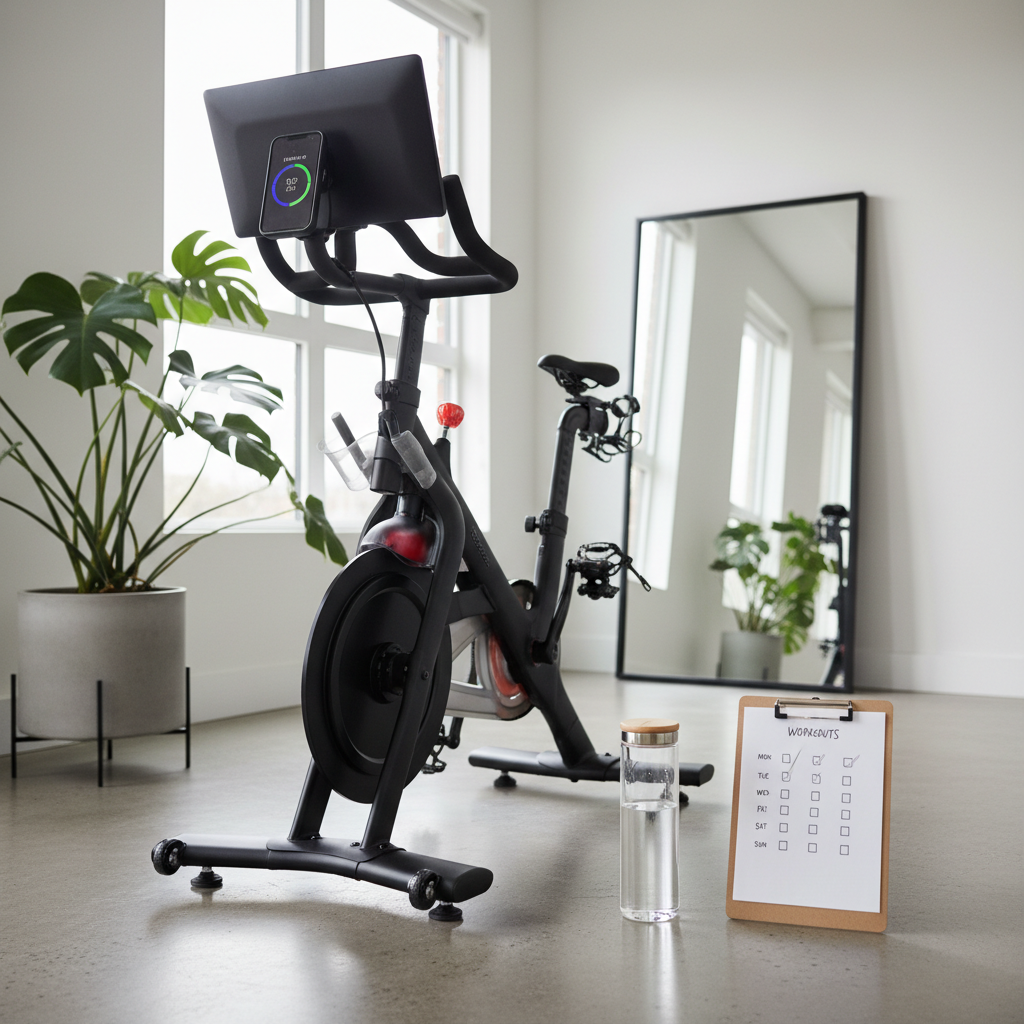
Whichever plan you pick, hold it steady long enough to see a pattern. Constantly switching workouts feels productive, but it makes progress hard to measure.
How to make fat burning cardio work better (without just doing more)
If you already do cardio and want better results, the lever is often quality and placement, not sheer volume.
Key tactics that usually help
- Use a “talk test” anchor: keep most sessions easy enough to talk, then make 1 session purposeful.
- Add steps before adding sprints: increasing daily movement tends to be easier on joints and recovery.
- Put hard sessions away from leg day: many people feel better with HIIT on an upper-body day or separate day.
- Track one metric: time, distance, pace, or average heart rate, pick one so you can progress gradually.
Progression ideas (small, boring, effective)
- Add 5 minutes to one easy session each week
- Add 1 interval round every 1–2 weeks, keep the effort the same
- Increase incline by 1–2% while keeping the same speed
According to the American Heart Association, monitoring intensity can be done with heart rate or perceived exertion, and you don’t need fancy equipment to stay in a safe, effective range. If heart rate data stresses you out, perceived effort is fine for most people.
Common mistakes that quietly sabotage results
- Doing HIIT like it’s a personality: 4–6 hard sessions weekly often backfires through fatigue, cravings, or nagging pain.
- Skipping strength training: fat loss looks better and tends to feel better when you keep muscle. Even 2 full-body sessions weekly helps.
- Eating back every calorie “earned”: many trackers overestimate burn, and hunger can spike after hard sessions.
- Only measuring with the scale: waist, photos, and how clothes fit often tell the story sooner.
- Bad shoes, bad surfaces: running is great until it isn’t. If joints complain, switch modes and live to train another week.
If you suspect you’re under-recovering, try a simple reset: one week of only easy cardio plus normal lifting, then reintroduce one harder session. A lot of people feel progress restart when the plan stops feeling like punishment.
Conclusion: the “best” cardio is the one you can repeat
The most reliable path is boring in a good way: keep fat burning cardio mostly easy-to-moderate, add a small dose of intervals if you tolerate them, and make the weekly total realistic for your life. Pair it with basic nutrition habits and enough sleep, and results become much less mysterious.
If you want one action step today, pick a plan above and schedule the first three sessions on your calendar, then keep effort slightly easier than you think you “should” go, especially in week one.
FAQ
What is the best fat burning cardio for beginners?
Brisk walking and low-impact machines usually win because they’re repeatable and less likely to beat up joints. Most beginners progress faster by building frequency first, then intensity later.
Is HIIT better than walking for fat loss?
HIIT can be more time-efficient, but walking is easier to recover from and easier to do often. Many people get the best outcome from mostly easy sessions plus one interval day, rather than going hard every workout.
How long should I do cardio to burn fat?
It depends on intensity and your weekly total. A workable range for many people is 25–45 minutes per session, 3–5 days per week, adjusting up or down based on recovery and schedule.
Should I do cardio fasted to lose more fat?
Some people like fasted easy cardio because it feels comfortable, others feel weak or overeat later. If you try it, keep intensity low and pay attention to appetite and performance across the day.
What cardio burns the most calories?
Hard running often burns a lot, but “most” isn’t always “best” if it causes pain or fatigue. The highest calorie burn is the one you can repeat consistently without breaking recovery.
Can I do fat burning cardio every day?
Easy walking can be fine daily for many people, but daily hard sessions often lead to overuse issues. A safer approach is mixing easy days with true rest or light movement days.
Why am I doing cardio but not losing weight?
Common reasons include eating more due to increased hunger, overestimating calorie burn, inconsistent weekly volume, or poor sleep. If the trend hasn’t moved in 3–4 weeks, consider simplifying the plan and tightening one nutrition habit.
If you’re trying to lose fat but you’re not sure which cardio style fits your body and schedule, it may help to share your current routine, weekly step count, and any joint limitations with a qualified coach or clinician, so your plan feels clear instead of guessy.