
Fitness tracking tips matter most when you feel like you work hard but can’t tell if it’s paying off, or you keep “starting over” every few weeks. A good tracking setup turns vague effort into clear signals, so you can adjust early instead of guessing for months.
Tracking also keeps motivation grounded, not just hype. When the scale stalls but your strength, waist measurement, or resting heart rate trends improve, you get proof that something real is happening.
This guide walks through what to track, how often to track it, and how to keep it sustainable. You’ll also see a simple table you can copy, plus common traps that make people quit tracking even when they genuinely care.
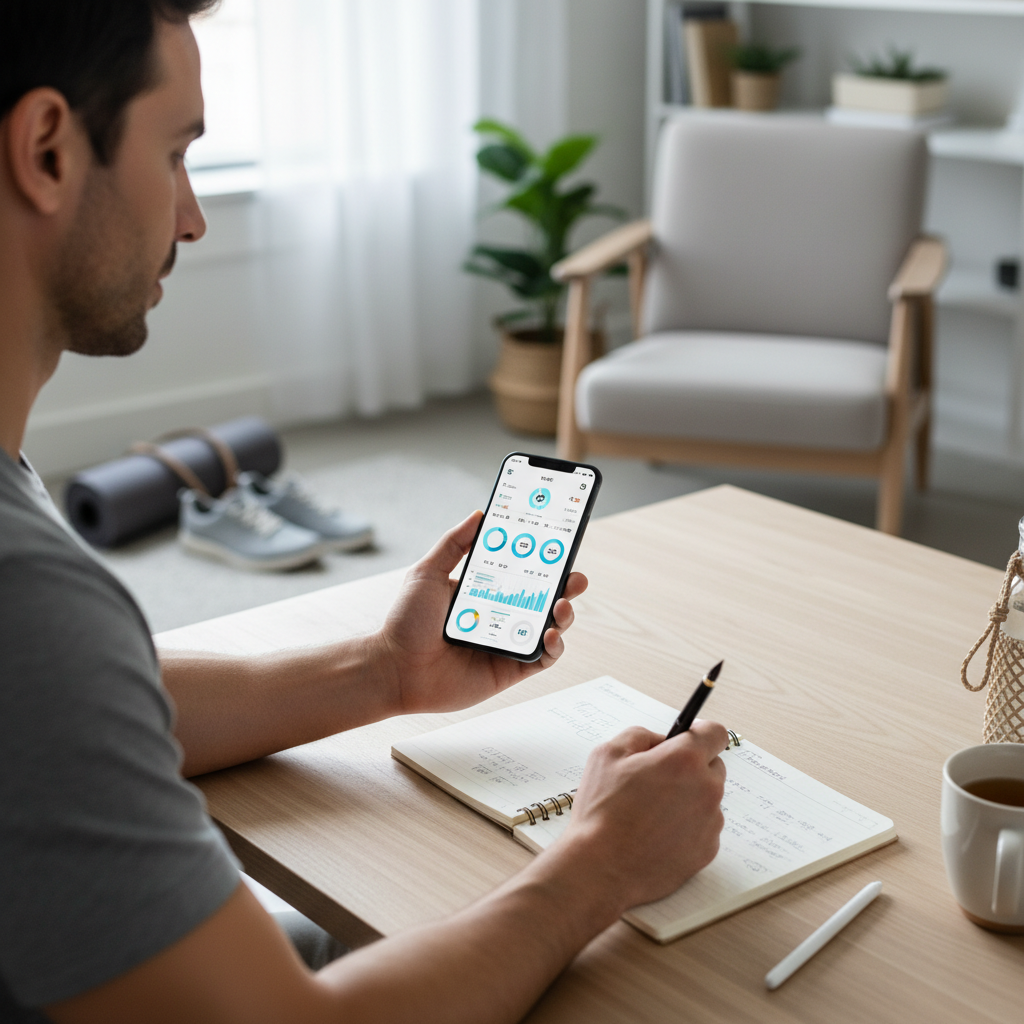
Start with a goal you can actually measure
Most “I’m tracking but it’s not working” situations come from goals that sound motivating but don’t translate into decisions. “Get toned” can’t tell you what to do this week. “Do 3 strength sessions weekly for 8 weeks” can.
A practical goal usually has two layers: an outcome (what you want) and a process (what you’ll do). Outcome goals guide direction, process goals create consistency.
Examples that hold up in real life
- Fat loss: “Lose 10 lb in 12 weeks” + “Average 8,000 steps/day and strength train 3x/week.”
- Muscle gain: “Add 2–4 lb lean mass this quarter” + “Progressively overload 4 lifts and hit protein targets most days.”
- Health: “Lower blood pressure” + “150 minutes/week of moderate cardio, track sodium awareness.” (Medical goals often warrant a clinician’s input.)
According to the CDC (Centers for Disease Control and Prevention), adults benefit from regular aerobic activity plus muscle-strengthening activity, which can be a useful backbone for process goals.
Pick the right metrics (and avoid the noisy ones)
The best tracking stack mixes one primary metric with a few supporting metrics. Too many numbers creates busywork. Too few numbers hides what’s going on.
What to track, by goal
- Fat loss: weekly weight trend, waist measurement, step count, calorie/protein consistency (if you track intake).
- Strength: top set weight/reps, total weekly sets per muscle, session attendance, sleep quality (simple 1–5 score works).
- Endurance: pace at a steady heart rate, weekly mileage/time, perceived exertion (RPE), recovery markers.
Be cautious with metrics that swing day-to-day, like scale weight, smartwatch calorie burn estimates, or a single “good/bad” workout. They can be helpful, but they’re rarely the full story.
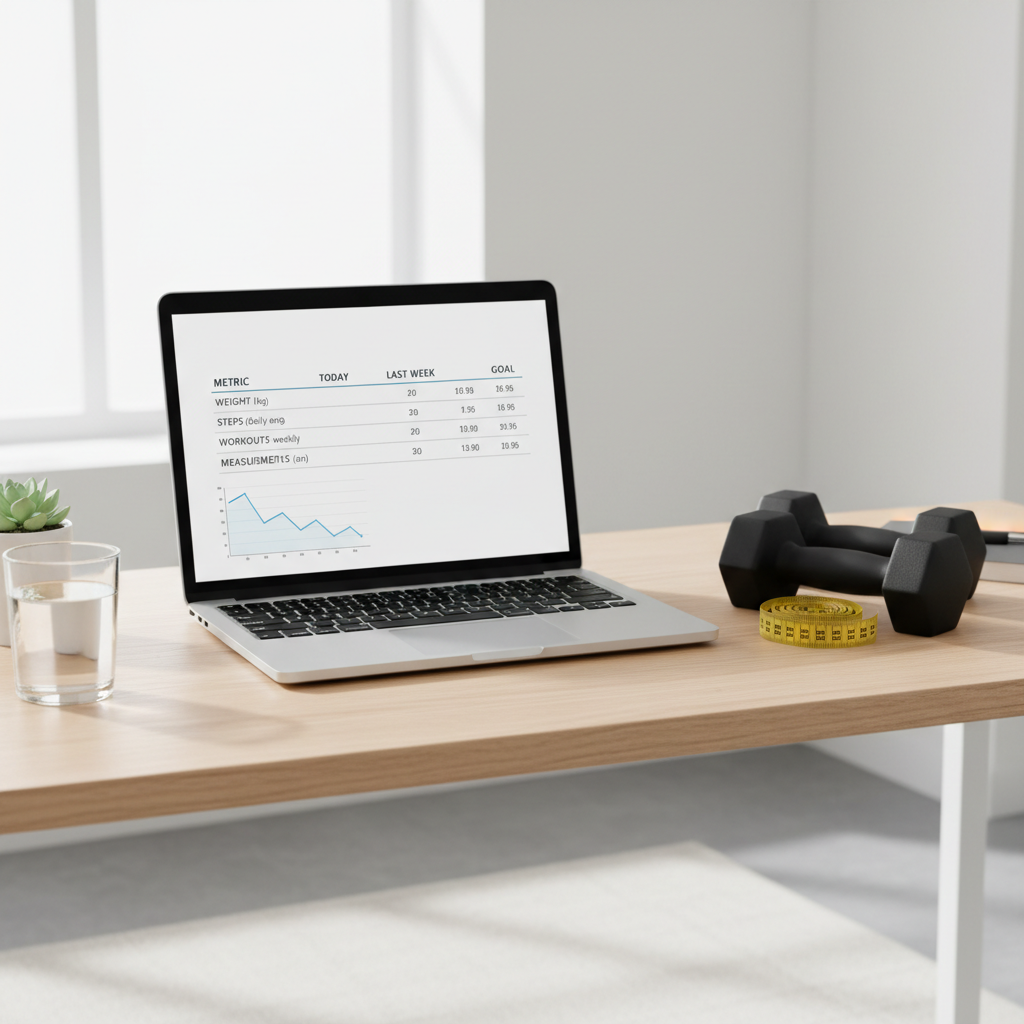
Build a tracking cadence you can sustain
Consistency beats intensity with tracking. If your system requires 20 minutes a day, you’ll eventually “take a break” and never reopen the spreadsheet.
A realistic cadence for most people
- Daily (1–3 minutes): steps, workout completed yes/no, protein target yes/no, sleep rating.
- Weekly (10 minutes): average weight for the week, waist/hip measurement, review training progress, plan next week.
- Monthly (15 minutes): progress photos, broader trend review, adjust goals if needed.
These fitness tracking tips sound basic, but this rhythm solves the biggest issue: you stop reacting to random fluctuations and start responding to trends.
Use a simple tracker (table you can copy)
If you already use an app, great. If you bounce between apps, a basic table often wins because it’s fast and doesn’t rely on perfect logging.
| Category | Metric | How Often | What “Good” Looks Like |
|---|---|---|---|
| Adherence | Workouts completed | Weekly | 2–5 sessions, depending on plan |
| Activity | Steps (average) | Weekly | Trend upward or stable at target range |
| Strength | Top set on key lifts | Per workout | Small progress every 1–3 weeks |
| Body comp | Weight (weekly average) | Weekly | Slow change in desired direction |
| Measurements | Waist | Weekly or biweekly | Down for fat loss, stable for recomposition |
| Recovery | Sleep quality (1–5) | Daily | Mostly 3–5, fewer “1–2” days |
Key point: define “good” as a range or trend, not a single number. That mindset keeps tracking from turning into self-criticism.
Self-check: what’s actually breaking your progress?
When results feel stuck, the tracking system should help you diagnose, not shame you. Use this quick checklist to spot the most common bottleneck.
- You miss workouts often: problem is scheduling and friction, not the program.
- You hit workouts but lifts stall fast: may need better progression, more recovery, or more calories/protein (varies by person).
- Steps are low: daily movement might be the missing lever, especially for fat loss.
- Weight fluctuates wildly: look at sodium, carbs, sleep, stress, and menstrual cycle factors when relevant.
- You “track perfectly” for 5 days then quit: system too complex, or goals too aggressive.
According to the American Heart Association, regular physical activity supports heart health, but the best plan is the one you can repeat week after week, not the one that looks impressive on paper.

Practical fixes that make tracking easier (and more honest)
If you want fitness tracking tips that stick, reduce decisions. The system should feel almost boring.
Make logging frictionless
- Track at the same time each day, for example after coffee or before shower.
- Use default options: the same 3–5 breakfasts, the same training split, the same walking route.
- Keep a “minimum viable day,” like 20 minutes of lifting or a 30-minute walk, so you don’t treat a busy day as failure.
Use trend views, not single data points
- Weigh daily if you prefer, but judge progress from a weekly average.
- For strength, look at a lift across 3–4 exposures, not one session.
- For endurance, compare similar routes or tests, ideally in similar conditions.
Put your “why” into the tracker
Add one line weekly: “What felt hard?” and “What will I change?” That small reflection often does more than another graph.
Common mistakes (and what to do instead)
- Tracking everything: pick 3–6 core metrics, park the rest.
- Only tracking outcomes: if you don’t track behaviors, you can’t troubleshoot.
- Letting devices decide for you: wearables help, but their estimates can be off; use them as guidance, not a verdict.
- Chasing daily perfection: aim for a strong weekly pattern, not a flawless day.
If you have a history of disordered eating, obsessive tracking, or anxiety around numbers, it may be healthier to use lighter methods like attendance-based tracking, and it can be worth discussing options with a qualified professional.
Conclusion: a small system beats a perfect one
Fitness tracking tips work when they create clarity with minimal effort: a measurable goal, a handful of meaningful metrics, and a weekly review that leads to one adjustment. If you do only two things this week, set a process goal you can repeat and start a simple weekly check-in that focuses on trends.
If you want an easy start, copy the table above into Notes or Google Sheets, run it for two weeks without trying to optimize, then adjust what feels annoying. That’s usually where the real “effective” tracking begins.
Key takeaways
- Track behaviors and outcomes, not just the scale or a single performance number.
- Review weekly so you respond to trends, not noise.
- Reduce friction with defaults, short logs, and a minimum viable day.
FAQ
How often should I weigh myself when tracking fat loss?
Many people do well with daily weigh-ins paired with a weekly average, because it smooths normal fluctuations. If daily numbers stress you out, weekly weigh-ins can still work, you just get fewer data points.
What are the best fitness tracking tips if I hate logging food?
Focus on “food structure” tracking: protein servings, veggie servings, and a simple yes/no for planned meals. It’s less precise than full calorie logging, but often more sustainable.
Are smartwatches accurate for calories burned?
They can be useful for patterns, but calorie estimates often vary by device and person. Treat the number as a rough signal, then adjust based on real-world trends like weight, performance, and recovery.
How do I track strength progress if my reps change every session?
Pick one or two “anchor lifts” and log top sets with weight and reps, then compare over a few weeks. You can also track total weekly sets per muscle to confirm you’re doing enough work.
Why is my weight not changing even though I’m consistent?
Sometimes you’re gaining muscle while losing fat, or water retention masks changes for a bit. Check waist measurements, step averages, and weekly weight trends, and consider talking with a professional if you suspect a medical factor.
What’s a realistic way to track without getting obsessive?
Limit metrics, keep reviews on a schedule, and avoid checking dashboards repeatedly during the day. If tracking affects mood or self-worth, a less numerical approach is often a better fit.
When should I hire a coach or consult a professional?
If you have persistent pain, unexplained fatigue, medical conditions, or you keep spinning your wheels despite consistent effort, a qualified coach, registered dietitian, or clinician can help you choose safer targets and better next steps.
If you’re trying to make progress without turning tracking into a second job, a simple weekly review plus a handful of metrics usually gets you 80% of the benefit. If you need a more hands-off setup, consider using a templated tracker and having a coach or qualified pro sanity-check your goal and measurement plan.