
Sports fitness training gets tricky when you try to improve performance and stay healthy at the same time, especially if you mix cardio, strength, and sport practice without a plan.
If you feel stuck, tired all the time, or unsure what to do on “non-sport” days, this guide helps you build a simple system: what to train, how to progress, and how to recover so your workouts actually support your sport.
I’ll keep it practical, with a weekly template, a quick self-check, and the most common mistakes that waste effort. If you already have a coach, think of this as the framework that makes coaching advice easier to execute.

What “sports fitness training” actually includes
For most recreational and competitive athletes, sports fitness training is a mix of four buckets. Your sport already covers some of them, but rarely all of them in the right dose.
- Strength: building force with legs, hips, trunk, and upper body, often in the weight room.
- Power and speed: turning strength into fast movement, like jumps, sprints, throws.
- Energy systems: conditioning matched to your sport, not random “burn” sessions.
- Mobility and tissue capacity: range of motion plus tolerance for repeated loading, like running mileage or cutting.
According to the American College of Sports Medicine (ACSM), balanced programs typically combine aerobic work, resistance training, and flexibility, with progression over time. For sport, the big upgrade is making that combination match your season and your position/event demands.
Start with a simple needs analysis (so you stop guessing)
Many athletes train what they enjoy, then call it “conditioning.” The better approach is asking what your sport demands, then filling gaps.
Three questions that guide your plan
- What decides performance? For example, first-step quickness, repeated sprints, top-end strength, or endurance pacing.
- What breaks down first? Legs dying late-game, shoulder irritation, low back tightness, or hamstrings grabbing.
- How many “hard days” can you recover from? Your schedule matters as much as your motivation.
If you’re in-season, your sport practices and games are already high-intensity. Your gym work should support that, not compete with it.
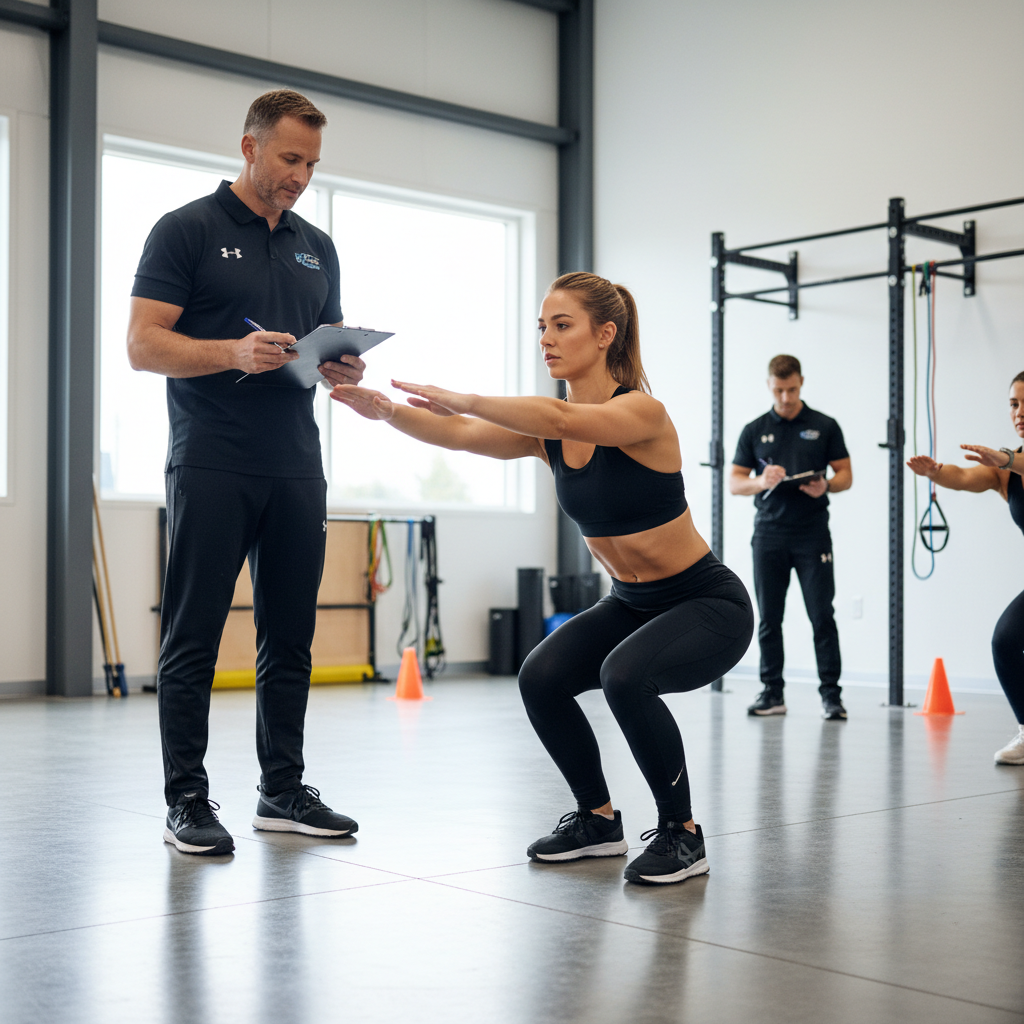
Quick self-check: what type of athlete are you right now?
This mini checklist helps you choose emphasis without overthinking. Pick the column that sounds most like your last 4–6 weeks.
| What you notice | Usually points to | Training emphasis |
|---|---|---|
| You gas out fast, but strength feels “okay” | Aerobic base gap or pacing issue | More zone 2 + smart intervals |
| You feel slow off the mark, legs heavy | Power/speed missing or too much fatigue | Short sprints, jumps, reduce junk volume |
| You lose battles for position, get pushed around | Max strength gap | Squat/hinge/push/pull strength cycle |
| Nagging pains show up with volume | Load management or mobility/tissue capacity | Progressive volume, technique, recovery |
If pain is sharp, worsening, or changes your movement, it’s worth checking in with a qualified clinician, because “training through it” often turns a small problem into a longer break.
Build your weekly plan: a practical template
A good week has a rhythm: hard sessions grouped, easy days truly easy, and at least one day that feels like recovery, not punishment. Below is a common structure for field and court athletes, adjust based on sport schedule.
Example weekly layout (off-season or light practice week)
- Day 1: Strength (lower focus) + short acceleration
- Day 2: Aerobic base (easy) + mobility
- Day 3: Strength (upper focus) + power (jumps/throws)
- Day 4: Interval conditioning matched to sport
- Day 5: Total-body strength (lighter) + speed mechanics
- Day 6: Easy recovery (walk, bike, light swim) or skill work
- Day 7: Off or very light mobility
If you play games on weekends, you typically shift the hardest strength work earlier in the week and keep the 48 hours pre-game lower-fatigue.
How to progress without burning out
Progression is where sports fitness training either works quietly for months or falls apart in two weeks. Most people add intensity and volume at the same time, then wonder why legs feel dead.
A simple progression rule that holds up in real life
- Change one main variable per week: add a set, add a little load, or add a rep, but not all three.
- Keep 1–3 reps in reserve on most strength sets, especially in-season, so you stay explosive.
- Deload every 4–8 weeks in many cases, especially if sleep, travel, or stress runs high.
According to the National Strength and Conditioning Association (NSCA), periodization and planned variation support long-term development. In plain English, you cycle emphasis so you can keep improving without accumulating nonstop fatigue.
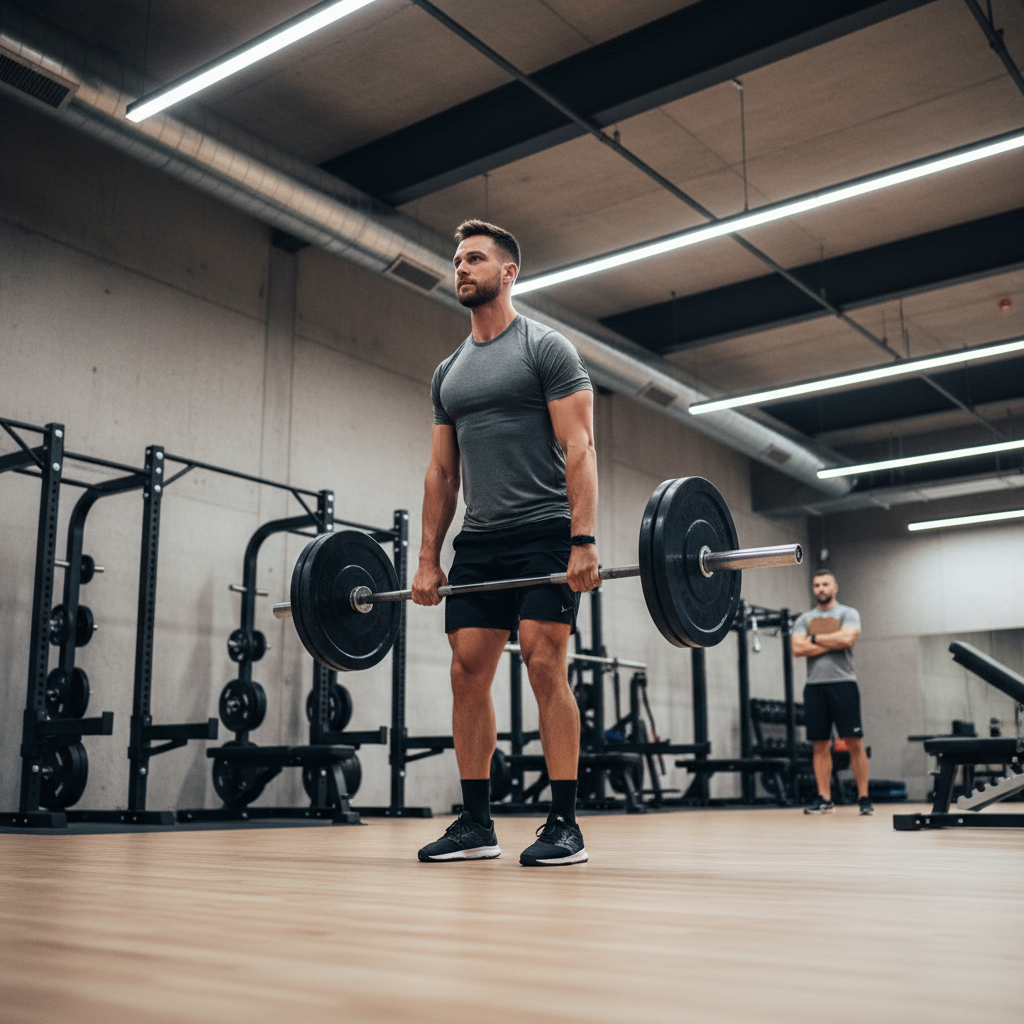
Execution details that make training feel “sport-specific”
“Sport-specific” is not about copying your sport in the weight room. It’s about training qualities that transfer, while protecting joints and managing fatigue.
Strength basics most athletes benefit from
- Hinge: deadlift pattern, RDL, hip thrust
- Squat: front squat, back squat, split squat
- Push: bench, incline, overhead press (as tolerated)
- Pull: rows, pull-ups, face pulls for shoulder balance
- Carry and brace: farmer carry, Pallof press, anti-rotation work
Conditioning that matches sport demands
- Stop-and-go sports (basketball, soccer): repeated sprint intervals, plus an aerobic base day.
- Endurance sports (distance running, cycling): more zone 2 volume, targeted threshold sessions.
- Power sports (football, sprinting): short alactic bursts, longer rest, less “grindy” conditioning.
If you’re unsure, a safe default is one easy aerobic day and one interval day per week, then adjust based on how your practices already tax you.
Common mistakes (and what to do instead)
- Too many hard days: If every session leaves you wrecked, performance usually drops. Keep easy days easy.
- Random workouts: Variety feels productive, but progressive overload needs repeatable patterns.
- Skipping warm-ups: A 6–10 minute ramp-up often improves session quality. Keep it short, do it every time.
- Copying pro programs: Pros recover differently, and many have support teams. Scale to your life.
- Ignoring sleep and fueling: Training stress plus low sleep often equals stalled progress and higher injury risk.
Key takeaway: if your sport practices are intense, the “win” is better quality and consistency, not adding more fatigue.
When to get professional help
Plenty of athletes can self-coach a solid base plan, but some situations deserve extra eyes.
- Persistent pain lasting more than 1–2 weeks, or pain that changes your mechanics.
- History of major injury (ACL, shoulder dislocation, stress fracture), where return-to-sport progressions matter.
- Performance plateau despite consistent training, adequate recovery, and good technique.
- Complex goals like cutting weight while maintaining power, which can get tricky fast.
Depending on the issue, that might mean a certified strength coach, a physical therapist, a sports medicine physician, or a registered dietitian. If you’re dealing with medical conditions, it’s smart to consult a qualified healthcare professional before big training changes.
Practical next steps (you can do this week)
- Pick one primary goal for the next 4 weeks: strength, conditioning, speed, or resilience.
- Plan two strength days with repeatable lifts, track loads and reps.
- Add one easy aerobic session you can recover from quickly, keep it conversational pace.
- Schedule recovery like you schedule workouts: sleep window, light day, hydration, protein.
If you do nothing else, stop treating training like a daily test, and start treating it like a weekly plan.
Conclusion
Sports fitness training works best when it supports your sport, not when it competes with it. Once you clarify what your sport demands, pick a weekly rhythm, and progress one variable at a time, your training starts to feel calmer, and performance usually follows.
If you want a simple action step, write your next week on paper tonight, then commit to repeating it for two weeks before you “optimize” anything. Consistency beats cleverness more often than people want to admit.
FAQ
How many days per week should I do sports fitness training?
Many recreational athletes do well with 3–5 training days total including sport practice, with 2 strength days as a baseline. The right number depends on your sport schedule, sleep, and how fast you recover.
Should I lift heavy during my season?
Often yes, but with lower volume and more caution around soreness. Keeping strength helps maintain power and resilience, but the plan should respect game days and practice intensity.
What’s the difference between conditioning and cardio for athletes?
Cardio is a broad term for aerobic work. Conditioning is more specific, it targets the energy demands of your sport, including repeat-sprint ability, tempo changes, and recovery between efforts.
How do I know if I’m overtraining or just tired?
If fatigue improves after 1–3 easier days, it may just be normal training stress. If you see persistent performance drop, sleep disruption, mood changes, or nagging pain, it’s a sign to reduce load and consider professional input.
Is HIIT always better for sports performance?
Not always. HIIT can help, but many athletes also need easy aerobic work to recover better and handle more quality training. Too much HIIT often becomes “junk hard” that drains legs.
What should I eat before and after training?
Many people do well with carbs and fluids before hard sessions, then protein plus carbs afterward to support recovery. Needs vary by body size, training volume, and goals, so a registered dietitian can help if you want precision.
Can I do sports fitness training at home with minimal equipment?
Yes, especially for base strength, mobility, and conditioning. You may progress slower without heavy loads, but bands, dumbbells, a pull-up bar, and running or biking can cover a lot.