
Fitness Motivation rarely disappears because you suddenly “got lazy”, it usually fades because your plan asks too much from your real life. If your schedule changes, stress runs high, or workouts feel like punishment, motivation becomes the first thing to break.
This guide is about building momentum you can actually keep, even on normal weekdays. We’ll cover why motivation dips, how to design a routine that survives busy days, and what to do when you fall off track without turning it into a spiral.
Along the way you’ll get a quick self-check, a practical table you can use to troubleshoot your stuck points, and a handful of scripts and habits that make “I don’t feel like it” less powerful.
Why daily motivation feels hard (and what’s really going on)
Most people think motivation should feel like hype, but for daily fitness it usually looks like calm consistency. When it feels hard, it’s often one of these problems, not a character flaw.
- Your plan is too rigid, so one missed day feels like failure and you quit for the week.
- Your workouts create too much friction, extra driving, unclear routines, equipment you can’t find, or a gym that feels intimidating.
- Your goal is fuzzy, “get in shape” doesn’t tell your brain what to do today at 6:30 pm.
- You’re under-recovering, soreness, poor sleep, and stress make exercise feel heavier than it should.
- You’re relying on mood, but mood is unreliable, especially after work.
According to the Centers for Disease Control and Prevention (CDC), adults benefit from regular physical activity that includes aerobic activity and muscle-strengthening activity. That’s useful because it reframes the job: you’re not chasing a perfect routine, you’re building a weekly pattern that supports health over time.

A quick self-check: what type of motivation problem do you have?
If you diagnose the wrong issue, you’ll pick the wrong fix. Read these and choose the one that sounds most like you this month.
- “I don’t have time.” Your routine likely needs a smaller minimum dose and less setup time.
- “I start strong, then fade after 1–2 weeks.” Your plan may be too intense or too strict.
- “I’m bored.” You need novelty or a clearer progression so you can see wins.
- “I feel guilty when I miss.” You need a reset rule and a lighter ‘backup workout’.
- “I’m consistent, but not excited.” You may be ready for a new goal, a new metric, or social accountability.
Pick one primary issue. You can have multiple, but the main one should drive what you change first.
Set goals that create action (not pressure)
Goals work when they reduce decision-making. If your goal adds pressure, you’ll avoid it on hard days. A useful way to think about it is: outcome goals inspire, process goals deliver.
Use a two-layer goal
- Outcome (inspiring, slower): “Run a comfortable 5K,” “Lift without back pain,” “Have more energy by mid-afternoon.”
- Process (daily/weekly, controllable): “Move 20 minutes after work 4 days/week,” “Strength train Tue/Thu/Sat.”
Write a “minimum” and an “upgrade”
This is one of the cleanest ways to protect Fitness Motivation because it keeps you in the game even when life gets messy.
- Minimum: 10 minutes, easy pace, no special equipment.
- Upgrade: 30–45 minutes, full workout, optional add-ons.
If you only do the minimum, you still count it as a win. That mindset shift matters more than people expect.
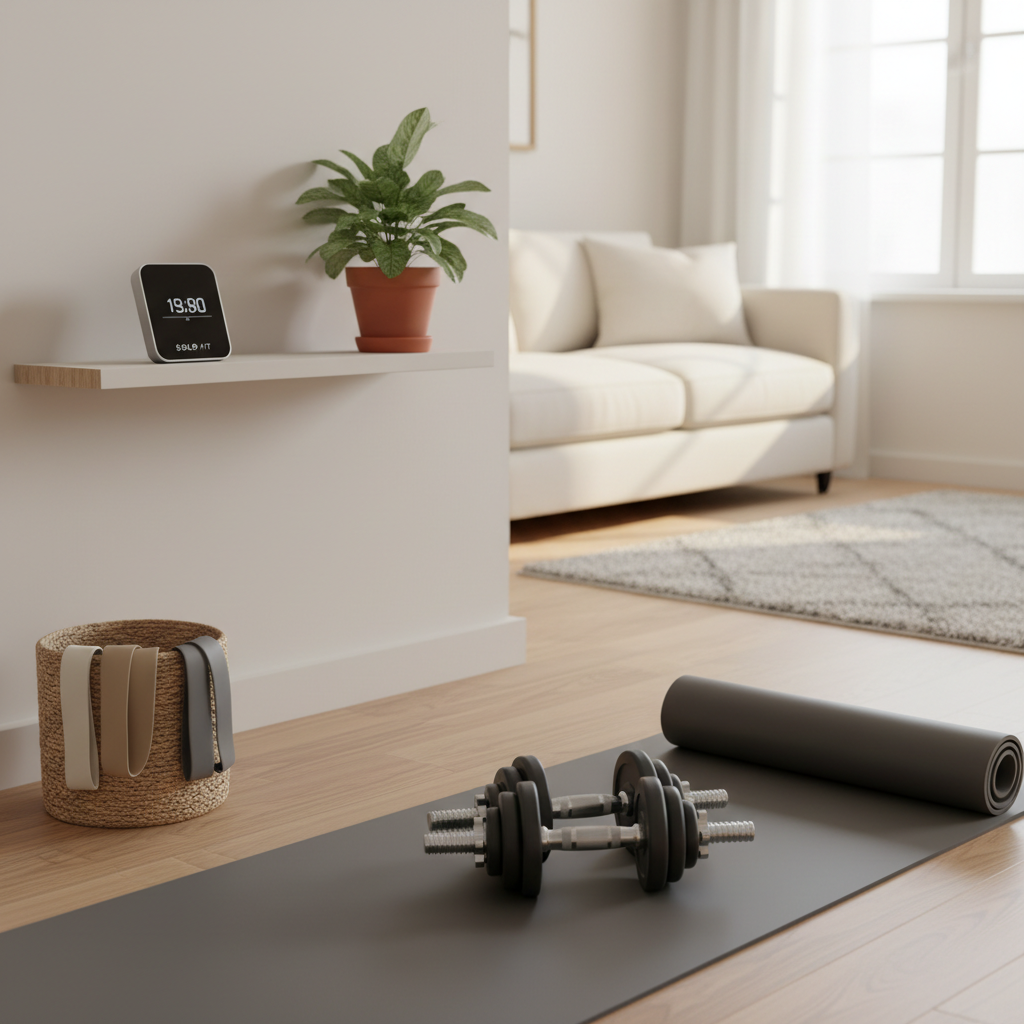
Design your routine to remove friction (the real secret)
When daily workouts feel “hard to start,” it’s often friction, not willpower. Your job is to make starting embarrassingly easy.
Friction reducers that actually work
- Decide the workout the day before, even if it’s just “walk + stretch.”
- Make the first step tiny, put shoes by the door, open the mat, queue the video.
- Use a fixed time anchor, for example “after coffee” or “right after I shut my laptop.”
- Keep equipment visible, out of sight often becomes out of mind.
- Have a no-thought playlist, one button and you’re moving.
According to the American Psychological Association (APA), behavior change tends to stick better when goals are realistic and when you plan for obstacles. That’s exactly what friction reduction is: planning for the version of you that feels tired.
Troubleshooting table: match the problem to the fix
If you feel stuck, use this like a quick diagnostic. Don’t overhaul everything, choose one fix and test it for 10–14 days.
| What you notice | What it often means | Try this for 2 weeks |
|---|---|---|
| You skip when you’re busy | Minimum dose is too big | Set a 10-minute “floor” workout, same days each week |
| You dread workouts | Intensity too high or you dislike the modality | Lower intensity, swap in walking, cycling, or shorter strength sessions |
| You do random workouts | No structure, no progression | Repeat 2–3 core workouts weekly and track one simple metric |
| You miss once and quit | All-or-nothing thinking | Create a reset rule: “Next scheduled day, I return to minimum” |
| You’re consistent but stalled | Load or volume not increasing, or recovery issues | Add small progression (reps/weight/time) and protect sleep |
Daily tactics to keep momentum when you’re not “feeling it”
Motivation-friendly days happen. But the routine lives or dies on average days, the ones where you’d rather do almost anything else.
Use the “10-minute contract”
Tell yourself you only have to do 10 minutes. After 10 minutes, you can stop with zero guilt. Many days you’ll continue, but that’s not the point, the point is showing up.
Pick a simple tracking method
- Streaks: mark an X on a calendar for every workout day.
- Minutes moved: total weekly minutes, flexible and forgiving.
- Two numbers: one strength metric and one cardio metric (example: push-ups and brisk-walk minutes).
Tracking is not about perfection, it’s a feedback loop. When Fitness Motivation dips, the log reminds you you’ve done hard things before.
Create “if-then” plans
- If I work late, then I do the 10-minute floor workout at home.
- If I feel sore, then I do an easy walk and mobility, not nothing.
- If I miss Monday, then I train Tuesday, no doubling up.

Accountability that doesn’t feel like pressure
Accountability works best when it feels supportive, not like someone is grading you. If you’ve tried strict challenges and hated them, you’re not alone.
Low-pressure options
- Workout buddy “check-in”: a simple text, “Did you move today?”
- Class or group session: you show up, someone else runs the plan.
- Shared calendar: you and a friend schedule workouts like appointments.
According to the American College of Sports Medicine (ACSM), consistent exercise programming and appropriate progression support adherence and results. In plain English, it helps to have a plan that’s repeatable, and people often follow plans better when someone else helps structure them.
Safety, recovery, and when motivation is a health signal
Sometimes “no motivation” is your body asking for recovery. If you feel unusually exhausted, dizzy, or you have pain that changes your movement, it may be smarter to scale down and consider checking with a qualified professional.
- Prioritize sleep, even a good routine can crumble with poor sleep.
- Progress gradually, sharp jumps in volume or intensity often backfire.
- Use pain rules, discomfort from effort differs from sharp or worsening pain.
If you have a medical condition, are returning after injury, or feel unsure about what’s safe, it’s reasonable to consult a physician or a certified fitness professional for guidance. For nutrition changes tied to performance or weight loss, a registered dietitian may help, especially if dieting has felt mentally heavy in the past.
Key takeaways you can use this week
- Fitness Motivation lasts longer when your plan fits your real schedule, not your ideal one.
- Protect consistency with a minimum workout and an upgrade option.
- Reduce friction: decide ahead, simplify setup, anchor workouts to a daily cue.
- Use tracking as feedback, not judgment, and build one supportive accountability loop.
If you want a simple action plan, choose one friction reducer today, set a 10-minute minimum for the next two weeks, and log every session no matter how small. That combination is boring in the best way, it’s how consistency starts to feel normal.
FAQ
How do I get Fitness Motivation back after a long break?
Start with a minimum dose you can do even on busy days, like 10 minutes of walking or a short bodyweight routine. The goal is to rebuild the identity of “I show up,” then increase time or intensity slowly.
What if I only feel motivated at the beginning of the week?
That’s common because Mondays feel like a reset. Try pre-scheduling two short “midweek minimum” sessions and treat them like appointments, not optional extras.
Is it okay to exercise every day?
It can be, but daily training works better when intensity varies. Many people do well with a mix of strength days, easy cardio, and lighter recovery sessions like mobility or walking, and it’s smart to adjust if fatigue builds.
How long does it take to build a workout habit?
It varies a lot by person and by how complex the routine is. A practical target is to run the same simple plan for 2–4 weeks before judging it, because consistency usually improves once the steps feel familiar.
What should I do on days I feel sore?
Mild soreness often responds well to light movement, like an easy walk or mobility work. If soreness is sharp, worsening, or changes how you move, consider scaling back and consulting a professional if it persists.
Do I need a gym to stay consistent?
No. A gym can help, but consistency often comes from convenience. Many people stick better with home or neighborhood options because there’s less friction between intention and action.
How can I stay motivated when I’m not seeing results?
Track a process metric you control, like workouts completed or minutes moved, and one performance metric, like reps or pace. Visible progress in performance often shows up before aesthetic changes.
If you’re trying to rebuild a routine and want something more hands-off, a structured plan from a certified coach, a beginner-friendly class, or a simple app-based program can reduce decision fatigue and make consistency feel more automatic, without turning fitness into another stressful project.